



About Us
China to Bharat is the only professional group of companies who can be your import export agents from China to India imports for full or loose container cargo load.
Gallery
Social Account



End-to-End Tracking: Tools to Monitor Your Shipment from Port to Door
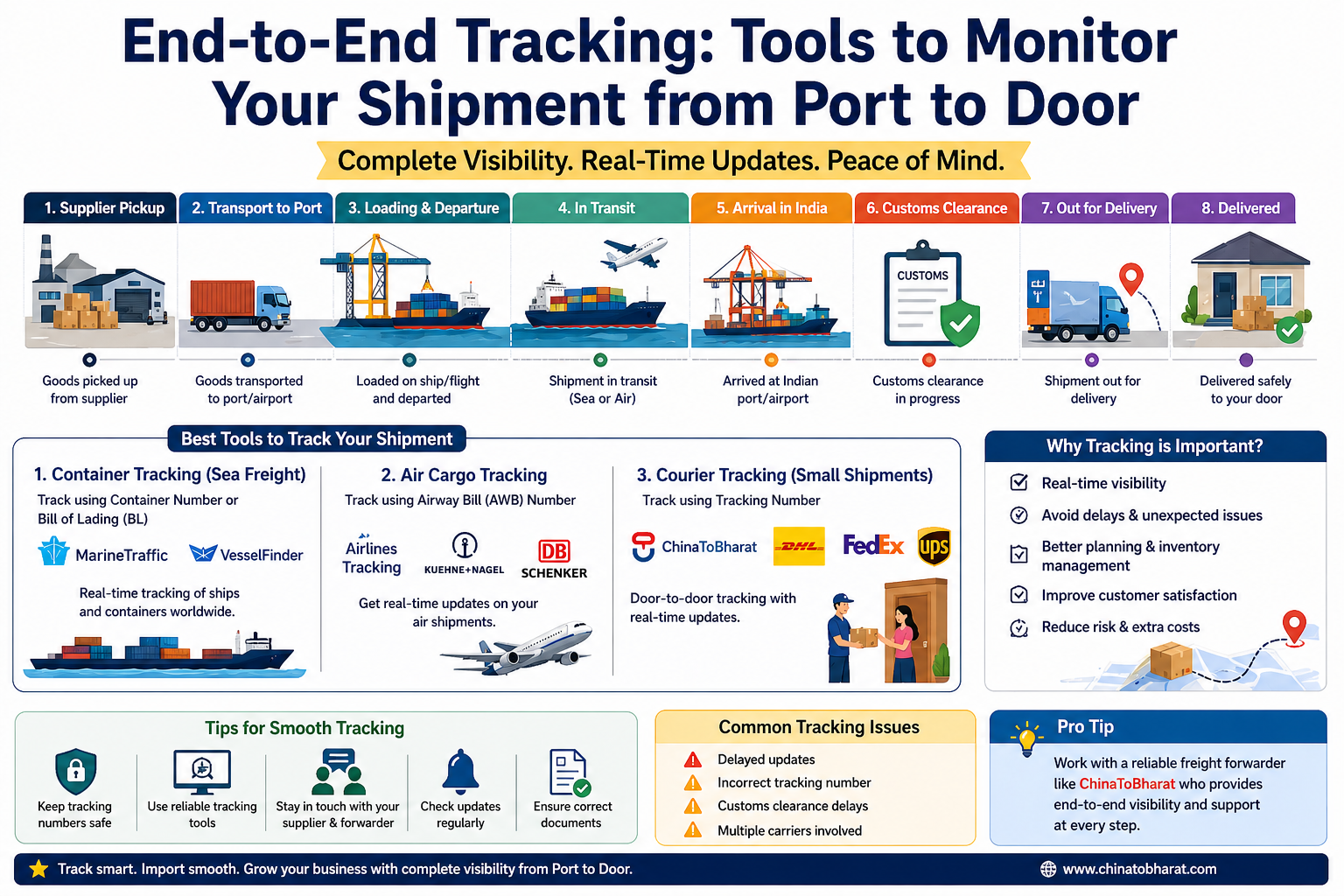
End-to-End Tracking: Tools to Monitor Your Shipment from Port to Door
When importing goods from China to India, tracking your shipment is not just helpful—it’s essential. Without proper visibility, delays, customs issues, or miscommunication can disrupt your entire business operation.
End-to-end tracking allows you to monitor your shipment at every stage, from the supplier’s warehouse in China to final delivery at your doorstep in India. In this guide, you’ll learn how shipment tracking works, the tools you can use, and how to avoid common tracking problems.
🚚 What is End-to-End Shipment Tracking?
End-to-end tracking means having complete visibility over your shipment journey. It covers every step in the logistics chain, including:
- Pickup from supplier
- Transport to port or airport
- Loading onto ship or aircraft
- International transit
- Arrival in India
- Customs clearance
- Final delivery
👉 This system ensures you always know where your goods are and what stage they are in.
📦 Why End-to-End Tracking is Important
Tracking is critical for both small importers and large businesses.
✅ Key Benefits:
1. Real-Time Visibility
You can check the exact location of your shipment anytime.
2. Better Planning
Knowing delivery timelines helps you manage inventory and avoid stock shortages.
3. Reduced Risk
If something goes wrong, you can act quickly and resolve issues.
4. Customer Satisfaction
If you run a business, you can give accurate updates to your customers.
5. Cost Control
Delays can increase costs. Tracking helps you avoid unnecessary expenses.
🔍 Types of Tracking in Shipping
Different shipping methods use different tracking systems.
🚢 1. Container Tracking (Sea Freight)
Container tracking is used for large shipments transported via sea.
You can track shipments using:
- Container number
- Bill of Lading (BL)
👉 This allows you to see which vessel your container is on and its current location.
✈️ 2. Air Cargo Tracking
Air freight tracking is faster and more precise.
Tracking is done using:
- Airway Bill (AWB) number
👉 Airlines provide frequent updates, making it easy to monitor urgent shipments.
📦 3. Courier Tracking
Courier tracking is the simplest and most user-friendly option.
Popular services include ChinaToBharat, DHL, FedEx, and UPS.
👉 These services provide door-to-door tracking with real-time updates.
🛠️ Best Tools for Shipment Tracking
Using the right tools can make tracking much easier and more efficient.
🌐 Universal Tracking Tools
These platforms support multiple carriers in one place:
- 17TRACK
- AfterShip
👉 Ideal for businesses managing multiple shipments.
🚢 Container Tracking Tools
For sea freight tracking:
- MarineTraffic
- VesselFinder
👉 These tools show real-time ship movement across global routes.
📊 Freight Forwarder Dashboards
Most freight forwarders provide their own tracking dashboards.
Features include:
- Shipment status updates
- Customs clearance progress
- Delivery tracking
👉 This is often the most detailed tracking source.
📍 Key Shipment Tracking Milestones
Understanding tracking updates helps you interpret shipment status correctly.
Common stages include:
- Shipment Picked Up
Goods are collected from the supplier. - Departed from Origin
Shipment leaves China. - In Transit
Goods are moving via sea or air. - Arrived at Destination
Shipment reaches India. - Customs Clearance in Progress
Documents are verified and duties are applied. - Out for Delivery
Shipment is on the way to your address. - Delivered
Final stage completed.
👉 Knowing these stages helps you track progress accurately.
🛃 Role of Customs in Tracking
Customs clearance is one of the most important stages in shipment tracking.
In India, it is handled by the Central Board of Indirect Taxes and Customs.
During this stage:
- Documents are verified
- Duties and taxes are calculated
- Goods are inspected (if required)
👉 Any issue here can delay your shipment, so tracking is crucial.
⚠️ Common Tracking Issues
Even with modern systems, tracking problems can occur.
🚫 Common Issues:
1. Delayed Updates
Tracking information may not update in real time.
2. Incorrect Tracking Number
Wrong or invalid numbers can cause confusion.
3. Customs Delays
Shipments may be held for inspection or documentation issues.
4. Multiple Carriers
Different carriers handling the shipment can cause gaps in tracking.
💡 How to Solve Tracking Problems
- Double-check tracking numbers
- Contact your supplier or freight forwarder
- Use universal tracking tools
- Keep all documents ready
👉 Staying proactive helps you avoid major issues.
📈 Advanced Tracking Tips for Importers
If you import regularly, follow these best practices:
✔ Use One Dashboard
Track all shipments in one place for better management.
✔ Enable Notifications
Get alerts for every status update.
✔ Track Daily
Especially during transit and customs clearance.
✔ Build Relationships
Work with reliable suppliers and logistics partners.
🚀 How Tracking Improves Your Business
End-to-end tracking is not just about knowing location—it directly impacts your business success.
- Helps avoid stock shortages
- Improves delivery timelines
- Builds customer trust
- Reduces unexpected costs
- Enhances overall efficiency
👉 Businesses that track shipments effectively grow faster.
📝 Conclusion
End-to-end shipment tracking is a must for anyone importing from China to India. It gives you complete control over your logistics, helps you avoid delays, and ensures smooth delivery from port to door.
By using the right tools, understanding tracking stages, and staying proactive, you can manage your shipments confidently and efficiently.
❓ FAQs
1. What is end-to-end tracking?
It means tracking your shipment from pickup to final delivery.
2. Which is the best tracking tool?
Tools like 17TRACK and AfterShip are widely used.
3. How do I track sea shipments?
Use container number or Bill of Lading with shipping line tools.
4. Why is my tracking not updating?
It may be due to system delays or customs processing.
5. Can I track courier shipments easily?
Yes, courier services provide real-time door-to-door tracking.


