



About Us
China to Bharat is the only professional group of companies who can be your import export agents from China to India imports for full or loose container cargo load.
Gallery
Social Account



Common Mistakes to Avoid When Importing from China to India: Complete Beginner’s Guide (2026)
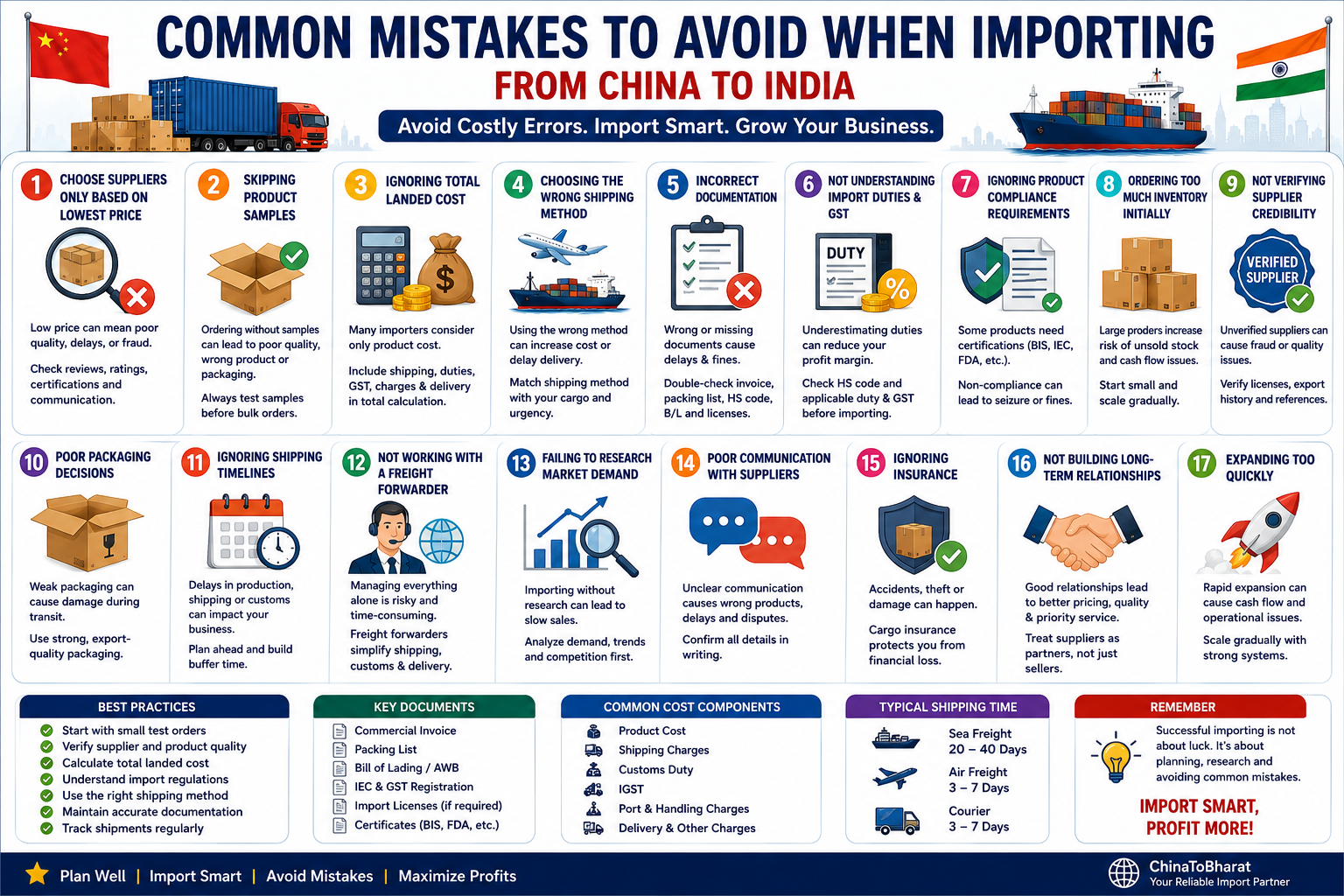
Common Mistakes to Avoid When Importing from China to India (Complete Guide 2026)
Importing products from China to India can be highly profitable, but it also comes with risks. Many beginners lose money because of avoidable mistakes related to suppliers, shipping, customs, product quality, and cost calculation.
Even experienced importers sometimes face delays, unexpected charges, or damaged goods because of poor planning.
The good news is that most importing problems can be avoided with proper knowledge and preparation.
In this guide, you’ll learn the most common mistakes importers make and how to avoid them for smoother, safer, and more profitable importing.
🚫 1. Choosing Suppliers Only Based on Lowest Price
One of the biggest mistakes beginners make is selecting suppliers purely because they offer the cheapest price.
Low prices may sometimes indicate:
- Poor product quality
- Fake certifications
- Delayed production
- Unreliable communication
Instead of focusing only on price, evaluate:
- Supplier reviews
- Export history
- Production capacity
- Communication quality
- Product samples
Platforms like Alibaba allow you to compare supplier ratings and transaction history.
👉 A slightly higher price from a reliable supplier often saves money in the long run.
📦 2. Skipping Product Samples
Some importers place large orders without testing samples first.
This can result in:
- Poor material quality
- Wrong specifications
- Defective products
- Packaging issues
Always order samples before mass production.
Check:
- Product quality
- Size and dimensions
- Functionality
- Packaging
- Branding accuracy
👉 Sample testing helps avoid expensive mistakes.
💰 3. Ignoring Total Landed Cost
Many beginners calculate only product cost and forget other expenses.
Your total landed cost includes:
- Product cost
- Shipping charges
- Customs duty
- GST
- Port charges
- Delivery charges
- Packaging costs
Formula:
Selling Price – Total Landed Cost = Profit
👉 Without proper calculations, profit margins can disappear quickly.
🚢 4. Choosing the Wrong Shipping Method
Every shipping method has advantages and disadvantages.
Sea Freight
Best for bulk shipments.
Air Freight
Best for urgent cargo.
Courier
Best for small shipments and samples.
Choosing the wrong option may increase:
- Shipping cost
- Delivery delays
- Damage risk
Freight forwarders like ChinaToBharat can help select the best method based on shipment size and urgency.
📑 5. Incorrect Documentation
Documentation errors are one of the main reasons shipments get delayed at customs.
Common mistakes include:
- Wrong HS codes
- Incorrect invoice values
- Missing documents
- Mismatched product descriptions
Important documents include:
- Commercial Invoice
- Packing List
- Bill of Lading
- Importer IEC
- GST details
👉 Double-check all documents before shipping.
🛃 6. Not Understanding Import Duties and GST
Many importers underestimate customs duties and taxes.
Import charges depend on:
- Product category
- HS code
- Product value
- Applicable regulations
The Central Board of Indirect Taxes and Customs handles import customs procedures in India.
👉 Always estimate duties before placing orders.
⚠️ 7. Ignoring Product Compliance Requirements
Certain products require certifications or approvals before they can be imported legally.
Examples:
- Electronics may require BIS certification
- Cosmetic products may need approvals
- Some machinery may need testing certificates
Ignoring compliance can lead to:
- Shipment seizure
- Penalties
- Customs delays
👉 Research product regulations carefully.
📉 8. Ordering Too Much Inventory Initially
New importers sometimes buy excessive quantities without validating market demand.
This creates risks such as:
- Slow-moving inventory
- Storage costs
- Cash flow issues
👉 Start small and scale gradually after testing the market.
🚫 9. Not Verifying Supplier Credibility
Some suppliers may appear professional online but lack reliability.
Before placing large orders:
- Verify business licenses
- Request certifications
- Conduct video calls
- Review export history
- Check references
👉 Supplier verification reduces fraud risk.
📦 10. Poor Packaging Decisions
Improper packaging can cause:
- Product damage
- Moisture exposure
- Breakage during transit
This is especially important for sea freight shipments.
👉 Invest in strong export-quality packaging.
⏱️ 11. Ignoring Shipping Timelines
Importing takes time.
Common delays may occur due to:
- Production delays
- Port congestion
- Customs inspections
- Holiday periods
Typical timelines:
- Sea freight: 20–40 days
- Air freight: 3–7 days
👉 Plan inventory early to avoid stock shortages.
🚚 12. Not Working with a Freight Forwarder
Managing international shipping alone can be difficult.
Freight forwarders help with:
- Cargo booking
- Customs clearance
- Documentation
- Tracking
- Delivery coordination
👉 Professional logistics support reduces risk and saves time.
📊 13. Failing to Research Market Demand
Importing products without market research can lead to poor sales.
Before importing:
- Study competitors
- Analyze customer demand
- Compare pricing trends
- Evaluate seasonality
Useful tools include:
👉 Demand validation is critical.
💬 14. Poor Communication with Suppliers
Unclear communication often causes:
- Wrong product specifications
- Packaging errors
- Production misunderstandings
Always confirm:
- Product details
- Quantity
- Delivery timelines
- Packaging instructions
- Payment terms
👉 Written confirmation helps avoid disputes.
🔒 15. Ignoring Insurance
Some importers skip cargo insurance to save money.
However, shipments can face:
- Damage
- Theft
- Container loss
- Water exposure
Cargo insurance provides financial protection against unexpected problems.
📈 16. Not Building Long-Term Supplier Relationships
Treating suppliers only as short-term vendors can limit business growth.
Strong relationships may lead to:
- Better pricing
- Faster production
- Improved quality
- Priority service
👉 Reliable suppliers become valuable business partners.
🚀 17. Expanding Too Quickly
Rapid expansion without operational control can create:
- Cash flow pressure
- Inventory problems
- Logistics complexity
👉 Scale gradually and maintain consistent systems.
💡 Best Practices for Successful Importing
✔ Start with small test orders
✔ Verify supplier credibility
✔ Calculate complete landed cost
✔ Understand import regulations
✔ Choose the right shipping method
✔ Use reliable freight forwarders
✔ Maintain accurate documentation
✔ Track shipments regularly
📦 Example of a Safe Importing Process
Research Product → Verify Supplier → Order Samples → Calculate Costs → Book Shipping → Clear Customs → Deliver Inventory
👉 A structured process reduces mistakes significantly.
📝 Conclusion
Importing from China to India offers excellent business opportunities, but success depends on careful planning and avoiding common mistakes.
From supplier selection and documentation to shipping and customs clearance, every stage matters. Small errors can create delays, extra costs, and operational problems.
By understanding the risks, researching thoroughly, and working with trusted logistics partners, you can build a smoother and more profitable importing business.
❓ Frequently Asked Questions (FAQs)
1. What is the biggest mistake beginners make when importing from China?
One of the most common mistakes is choosing suppliers only based on the lowest price without checking quality, reliability, or certifications.
2. How can I avoid customs delays when importing?
Ensure all shipping documents are accurate, use correct HS codes, and comply with Indian import regulations handled by the Central Board of Indirect Taxes and Customs.
3. Should I order product samples before bulk importing?
Yes. Ordering samples helps verify product quality, packaging, and specifications before placing a large order.
4. Which shipping method is best for importing from China?
Sea freight is best for bulk shipments, while air freight and courier services are suitable for urgent or small shipments. Logistics providers like ChinaToBharat can help choose the right option.
5. How do I reduce risks when importing products?
Research suppliers carefully, calculate total landed cost, verify compliance requirements, use cargo insurance, and work with experienced freight forwarders.


