



About Us
China to Bharat is the only professional group of companies who can be your import export agents from China to India imports for full or loose container cargo load.
Gallery
Social Account



Top Logistics and Supply Chain Trends to Watch in 2026: The Future of Global Logistics
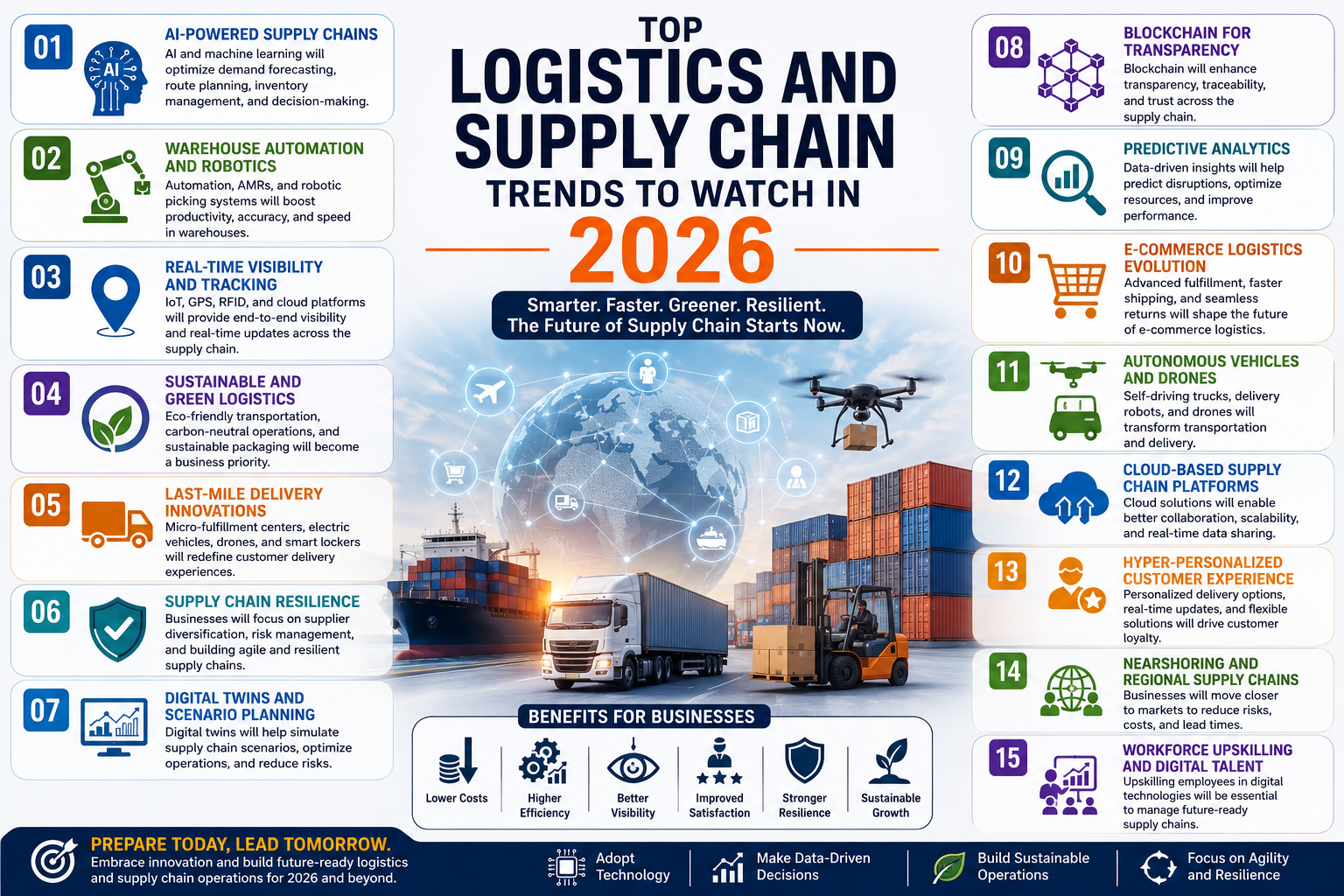
Top Logistics and Supply Chain Trends to Watch in 2026
The logistics and supply chain industry is undergoing one of the most significant transformations in its history. Rapid technological advancements, changing consumer expectations, sustainability initiatives, and global economic shifts are reshaping how goods move from manufacturers to consumers. As businesses prepare for 2026, staying ahead of emerging trends is no longer optional—it’s essential for maintaining competitiveness and operational efficiency.
From artificial intelligence and warehouse automation to green logistics and real-time visibility, the future of logistics is becoming smarter, faster, and more connected. Companies that embrace these innovations will be better positioned to reduce costs, improve customer satisfaction, and build resilient supply chains.
In this article, we’ll explore the top logistics and supply chain trends expected to dominate 2026 and how businesses can prepare for the next era of supply chain management.
1. Artificial Intelligence Will Drive Smarter Supply Chains
Artificial Intelligence (AI) is rapidly becoming the backbone of modern logistics operations. In 2026, AI will play an even greater role in helping companies predict demand, optimize routes, manage inventory, and improve decision-making.
Key Applications of AI in Logistics
- Demand forecasting
- Route optimization
- Predictive maintenance
- Inventory management
- Customer service automation
- Risk assessment
AI-powered systems can analyze vast amounts of data in real time, helping businesses make informed decisions faster than ever before.
Benefits
✔ Reduced operational costs
✔ Improved delivery accuracy
✔ Better demand planning
✔ Faster response to disruptions
Companies investing in AI today will gain a significant competitive advantage in the years ahead.
2. Warehouse Automation Will Continue to Expand
Warehouses are becoming increasingly automated as businesses seek faster and more efficient order fulfillment.
Automation technologies include:
- Autonomous mobile robots (AMRs)
- Automated storage systems
- Robotic picking solutions
- Conveyor automation
- Smart sorting systems
These technologies reduce manual labor requirements while increasing speed and accuracy.
Why It Matters
The growth of e-commerce continues to increase order volumes, making automation essential for meeting customer expectations.
Expected Benefits
- Faster order processing
- Lower labor costs
- Reduced human errors
- Improved inventory accuracy
Smart warehouses will become the standard rather than the exception in 2026.
3. Real-Time Supply Chain Visibility Will Become Essential
Businesses can no longer afford to operate with limited visibility into their supply chains.
Customers expect transparency, and companies need accurate information to make quick decisions.
Real-Time Visibility Technologies
- IoT sensors
- GPS tracking
- RFID technology
- Cloud-based monitoring platforms
- Digital dashboards
These tools allow businesses to track shipments, monitor inventory, and identify disruptions instantly.
Benefits
- Better customer communication
- Reduced shipment delays
- Improved operational control
- Faster problem resolution
Real-time visibility will be a critical factor in supply chain success.
4. Sustainability Will Shape Logistics Strategies
Environmental responsibility is becoming a major priority across industries.
Consumers, governments, and investors are increasingly demanding sustainable business practices.
Green Logistics Initiatives
- Electric delivery vehicles
- Carbon footprint reduction
- Sustainable packaging
- Route optimization
- Renewable energy-powered warehouses
Many companies are now setting ambitious carbon neutrality goals.
Benefits
- Lower emissions
- Improved brand reputation
- Regulatory compliance
- Long-term cost savings
Sustainability will move from a competitive advantage to a business necessity.
5. Last-Mile Delivery Innovation Will Accelerate
The last mile remains one of the most expensive and challenging stages of the delivery process.
As customer expectations for fast delivery continue to rise, businesses are exploring new solutions.
Emerging Last-Mile Trends
- Micro-fulfillment centers
- Electric delivery fleets
- Delivery lockers
- Crowd-sourced delivery networks
- Smart route planning
Benefits
- Faster deliveries
- Lower transportation costs
- Improved customer satisfaction
- Greater delivery flexibility
Companies that optimize last-mile logistics will gain a significant edge in customer experience.
6. Supply Chain Resilience Will Be a Top Priority
Recent global disruptions have exposed vulnerabilities in supply chains worldwide.
Businesses are now focusing on building more resilient operations.
Key Strategies
- Supplier diversification
- Nearshoring
- Safety stock management
- Risk monitoring systems
- Multi-carrier shipping strategies
Why It Matters
Resilient supply chains can:
- Minimize disruptions
- Reduce financial losses
- Maintain customer service levels
- Improve business continuity
Organizations are increasingly viewing resilience as a strategic investment.
7. Digital Twins Will Transform Supply Chain Planning
Digital twin technology creates virtual models of physical supply chains.
These simulations allow companies to test scenarios before implementing real-world changes.
Applications
- Warehouse design
- Transportation optimization
- Inventory planning
- Capacity forecasting
- Risk management
Benefits
- Better planning accuracy
- Lower operational risks
- Improved resource allocation
- Faster strategic decision-making
Digital twins will become a powerful tool for logistics leaders in 2026.
8. Blockchain Will Improve Supply Chain Transparency
Blockchain technology offers secure, transparent, and tamper-proof record-keeping.
Although adoption has been gradual, 2026 is expected to see increased implementation.
Use Cases
- Shipment verification
- Product traceability
- Smart contracts
- Fraud prevention
- Customs documentation
Advantages
- Enhanced trust
- Improved transparency
- Faster documentation processes
- Better compliance management
Blockchain can significantly improve accountability across global supply chains.
9. Predictive Analytics Will Improve Decision-Making
Data is becoming one of the most valuable assets in logistics.
Predictive analytics helps businesses anticipate future events based on historical and real-time data.
Applications
- Demand forecasting
- Fleet maintenance
- Inventory optimization
- Capacity planning
- Risk prediction
Benefits
- Better resource utilization
- Reduced waste
- Increased efficiency
- Improved customer satisfaction
Companies leveraging predictive analytics can proactively address challenges before they occur.
10. E-Commerce Logistics Will Continue to Evolve
The e-commerce boom shows no signs of slowing down.
Consumers increasingly expect:
- Same-day delivery
- Next-day shipping
- Real-time tracking
- Flexible returns
To meet these expectations, logistics providers must continuously innovate.
Emerging Solutions
- Urban fulfillment centers
- Automated warehouses
- Advanced inventory systems
- Omnichannel logistics
Businesses that optimize e-commerce logistics will be better equipped to handle growing demand.
11. Autonomous Vehicles and Delivery Technology
Self-driving technology continues to advance rapidly.
While widespread adoption may still take time, 2026 is expected to see increased pilot programs and limited commercial deployment.
Technologies to Watch
- Autonomous trucks
- Delivery robots
- Drone delivery systems
- Smart transportation platforms
Potential Benefits
- Reduced labor costs
- Improved delivery speed
- Enhanced operational efficiency
- Increased delivery capacity
Autonomous logistics could significantly reshape transportation networks in the coming years.
12. Cloud-Based Supply Chain Platforms Will Dominate
Cloud technology has become a critical component of modern logistics operations.
Cloud-based systems provide:
- Real-time collaboration
- Data accessibility
- Scalability
- Improved integration
Advantages
- Better communication
- Centralized data management
- Faster decision-making
- Reduced IT costs
As businesses become more digitally connected, cloud adoption will continue to accelerate.
13. Hyper-Personalized Customer Experiences
Customer expectations are changing rapidly.
Businesses are using logistics data to create more personalized delivery experiences.
Examples
- Flexible delivery windows
- Customized shipping options
- Real-time delivery updates
- Personalized notifications
Benefits
- Higher customer satisfaction
- Increased loyalty
- Better brand perception
Customer-centric logistics will become a major differentiator in competitive markets.
14. Nearshoring and Regional Supply Chains
Global supply chain disruptions have encouraged many businesses to move production closer to consumers.
Benefits of Nearshoring
- Reduced transportation costs
- Faster delivery times
- Lower supply chain risk
- Greater operational control
Regionalized supply chains are expected to become increasingly popular throughout 2026.
15. Workforce Upskilling and Digital Talent Demand
As logistics becomes more technology-driven, workforce requirements are changing.
Companies need employees skilled in:
- Data analytics
- AI systems
- Automation technologies
- Supply chain software
- Digital operations
Why It Matters
Technology alone isn’t enough.
Organizations need trained professionals who can effectively manage advanced logistics systems.
Investing in employee development will remain a key priority.
How Businesses Can Prepare for 2026
To stay competitive, businesses should begin preparing now.
Recommended Actions
Invest in Technology
Adopt:
- AI-powered platforms
- Warehouse automation
- Tracking systems
- Cloud-based software
Strengthen Supply Chain Resilience
- Diversify suppliers
- Develop contingency plans
- Improve risk monitoring
Prioritize Sustainability
- Reduce emissions
- Optimize transportation routes
- Implement eco-friendly packaging
Focus on Data
Use analytics to:
- Forecast demand
- Improve planning
- Increase efficiency
Enhance Customer Experience
Provide:
- Faster deliveries
- Real-time tracking
- Flexible shipping options
Businesses that proactively adapt will be better positioned for future growth.
Conclusion
The logistics and supply chain industry is entering a transformative period driven by innovation, automation, and sustainability. In 2026, technologies such as artificial intelligence, predictive analytics, warehouse robotics, blockchain, and digital twins will redefine how businesses manage operations and serve customers.
At the same time, growing demands for supply chain transparency, resilience, sustainability, and faster deliveries will continue to reshape industry standards. Companies that embrace these trends early will benefit from improved efficiency, reduced costs, enhanced customer satisfaction, and stronger competitive positioning.
The future of logistics is not just about moving goods from one place to another—it’s about creating intelligent, connected, and resilient supply chains capable of thriving in an increasingly complex global marketplace. Organizations that invest in innovation today will lead the logistics industry of tomorrow.


