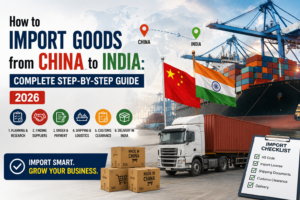
Importing products from China to India has become an important business opportunity for wholesalers, retailers, manufacturers, e-commerce sellers, and entrepreneurs. China offers a wide range of products, competitive manufacturing costs, and extensive supplier options. However, successful importing requires proper supplier selection, documentation, customs compliance, freight planning, and shipment management.
If you are planning to import products from China to India, this complete 2026 guide explains the process step by step, including sourcing, shipping, import documentation, customs clearance, duties, and delivery.
Why Import Products from China to India?
China is one of the world’s major manufacturing and sourcing destinations. Indian businesses can source electronics, machinery, industrial components, home products, packaging materials, textiles, accessories, tools, and many other products from Chinese manufacturers and suppliers.
The major advantages include:
- Competitive product prices
- Large supplier and manufacturer networks
- Wide product variety
- Private-label and OEM opportunities
- Bulk purchasing options
- Flexible manufacturing capabilities
- International shipping infrastructure
However, the lowest product price does not always mean the lowest overall cost. Importers should calculate the landed cost, including product price, freight, insurance, customs duties, taxes, clearance charges, and local transportation.
Step 1: Decide What Products to Import
The first step is selecting the right product. Research Indian market demand, competition, selling price, product regulations, and potential profit margins before placing an order.
Check whether the product is freely importable, restricted, or subject to specific compliance requirements. India’s import policy generally permits imports unless goods are prohibited, restricted, or subject to specific conditions.
Before ordering, identify the product’s HS/ITC(HS) code. Correct classification is important because the applicable import policy and customs treatment are linked to the product classification.
Step 2: Find and Verify Chinese Suppliers
After selecting your product, identify reliable suppliers or manufacturers in China.
You can compare suppliers based on:
- Product quality
- Manufacturing experience
- Minimum order quantity
- Pricing
- Certifications
- Production capacity
- Packaging options
- Payment terms
- Shipping arrangements
Do not depend only on product photographs or the supplier’s quoted price. Request samples, verify business information, inspect product quality, and clearly communicate specifications before placing a large order.
For larger shipments, a China sourcing company or import sourcing partner can help with supplier identification, negotiation, quality inspection, consolidation, and shipping coordination.
Step 3: Get a Complete Product & Shipping Quote
Ask your supplier for a detailed quotation covering the product specifications, quantity, unit price, packaging, weight, dimensions, and delivery terms.
At the same time, obtain freight quotations from a reliable logistics or freight forwarding company.
The shipping cost can depend on:
- Shipment weight
- Cargo volume
- Product type
- Origin location in China
- Destination in India
- Air or sea freight
- FCL or LCL shipment
- Customs requirements
- Delivery location
- Incoterms
Comparing the total landed cost rather than only the supplier’s product price helps you determine whether the import is commercially viable.
Step 4: Choose the Best Shipping Method
There are several ways to transport products from China to India.
Sea Freight
Sea freight is generally suitable for larger and heavier shipments. Importers can choose between FCL (Full Container Load) and LCL (Less than Container Load) depending on shipment volume.
FCL can be suitable when your cargo requires a complete container, while LCL allows smaller shipments to share container space.
Air Freight
Air freight is generally suitable for urgent, lightweight, or higher-value shipments where delivery speed is important.
Although air freight can cost more than sea freight, it can significantly reduce transportation time.
Express or Courier
International courier services can be useful for samples, documents, small parcels, and certain low-volume shipments. However, commercial imports should be evaluated based on applicable customs and regulatory requirements.
Choosing between air freight vs sea freight from China to India depends on your product, shipment size, urgency, budget, and business requirements.
Step 5: Obtain an Importer Exporter Code (IEC)
For most commercial imports into India, an Importer Exporter Code (IEC) is required. DGFT’s Foreign Trade Policy states that IEC is mandatory for undertaking import/export activities, subject to specified exemptions.
Businesses should ensure that their IEC information remains properly updated and that their import transactions comply with applicable regulations.
Step 6: Prepare Import Documents
Correct documentation is essential for smooth customs clearance.
Common documents for importing goods into India include:
- Commercial Invoice
- Packing List
- Bill of Lading or Airway Bill
- Bill of Entry
- Importer Exporter Code
- Product-specific certificates or approvals, where applicable
DGFT identifies the Bill of Lading/Airway Bill, Commercial Invoice cum Packing List, and Bill of Entry among the mandatory import documents, while additional documents may be required for specific products.
ICEGATE also confirms these core documents for electronic customs processing.
Step 7: Calculate Import Duty and Taxes
Before confirming your purchase, estimate the applicable customs duty and taxes.
The amount can depend on the product’s classification, assessable value, country of origin, and applicable notifications or trade measures.
ICEGATE provides an Import Duty Enquiry facility where importers can search using tariff classification, product description, and country of origin.
Because duty structures and product-specific requirements can change, importers should verify the applicable rates and regulations before shipment.
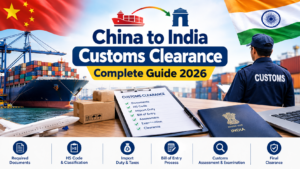
Step 8: Customs Clearance in India
When the shipment arrives in India, customs clearance is an important stage of the import process.
The importer or customs broker submits the required declaration and supporting documents. Customs authorities may assess the shipment, verify documentation, inspect the goods where required, and determine applicable duties and compliance requirements.
A professional customs clearance service can help coordinate documentation, declarations, examination, duty payment, and release procedures.
Step 9: Arrange Final Delivery
Once customs clearance is completed, the cargo can be transported from the port, airport, or customs location to the final destination.
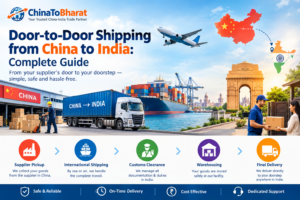
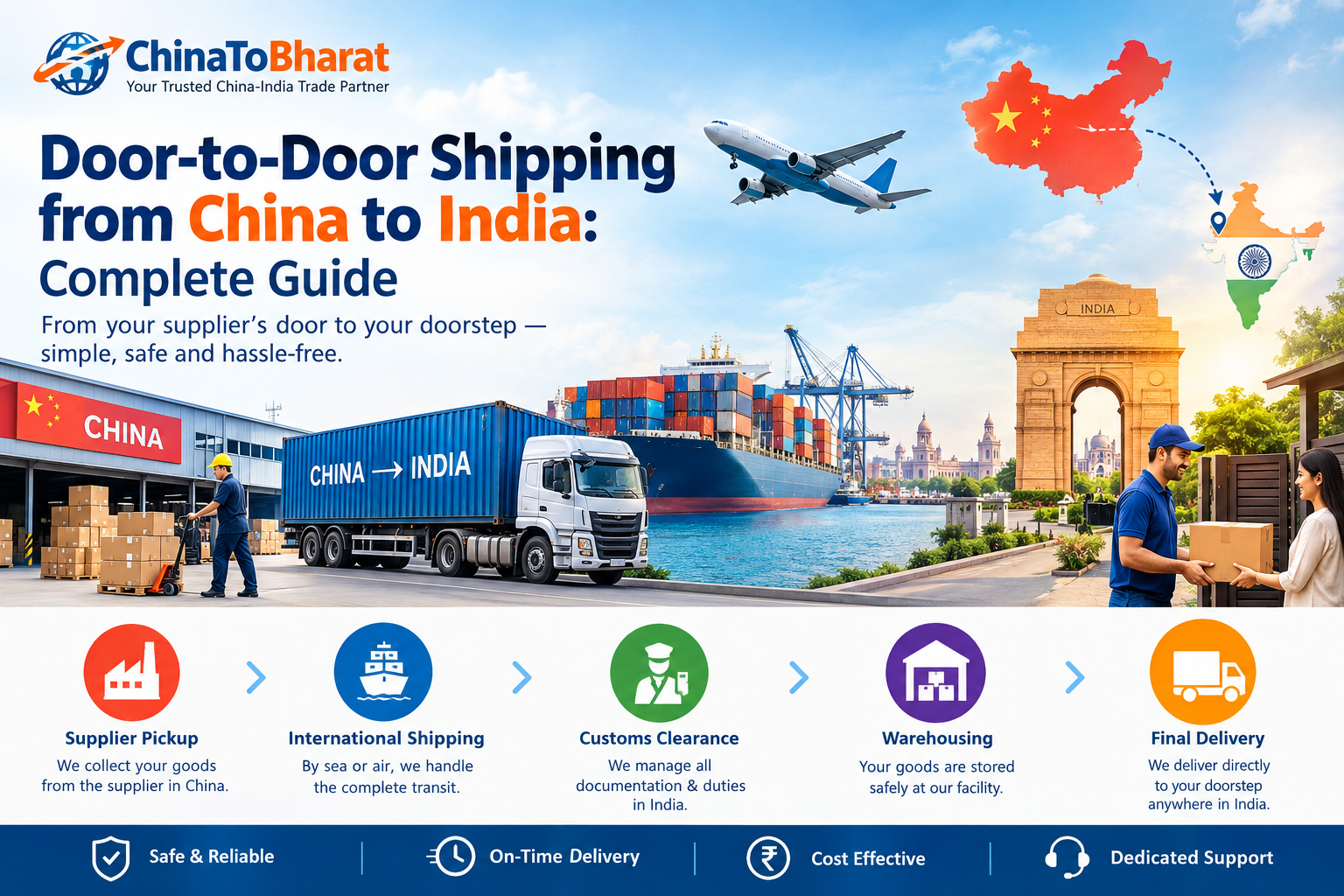
For businesses that prefer a simplified process, door-to-door shipping from China to India can combine international transportation, customs coordination, and final-mile delivery under an integrated logistics arrangement.
This can be particularly useful for businesses that do not have the resources to coordinate multiple logistics providers.
Common Mistakes to Avoid When Importing from China
New importers often make mistakes that increase costs or cause delays.
Avoid:
- Choosing suppliers only because they offer the lowest price.
- Ordering large quantities without requesting samples.
- Ignoring product-specific Indian regulations.
- Using an incorrect HS code.
- Underestimating customs and logistics costs.
- Failing to check product quality before shipment.
- Preparing incomplete documents.
- Selecting the wrong shipping method.
- Not calculating the complete landed cost.
- Working with unreliable logistics partners.
Proper planning can reduce unnecessary expenses and improve the reliability of your supply chain.
How China To Bharat Can Help
Importing from China involves multiple stages, from supplier sourcing and purchasing to freight forwarding, customs clearance, and final delivery.
China To Bharat can support businesses looking for an integrated logistics solution for their China-to-India shipments. Depending on the shipment requirement, businesses can plan sourcing, cargo movement, air freight, sea freight, customs clearance, and door-to-door delivery through a coordinated logistics process.
Whether you are importing a small commercial shipment or managing regular bulk cargo, selecting the right logistics partner can make the process more efficient and predictable.
Final Thoughts
Learning how to import products from China to India is the first step toward building a successful international sourcing operation. The key is to evaluate suppliers carefully, understand product regulations, calculate landed costs, prepare accurate documentation, select the right shipping method, and plan customs clearance in advance.
For 2026, Indian businesses should focus not only on getting competitive product prices but also on building a reliable end-to-end import supply chain. With the right sourcing strategy and logistics partner, importing from China can become a scalable opportunity for wholesalers, retailers, manufacturers, and e-commerce businesses.
Frequently Asked Questions
1. Do I need an IEC to import products from China to India?
For most commercial imports, an Importer Exporter Code is required, subject to applicable exemptions. DGFT states that IEC is mandatory for import/export activities unless specifically exempted.
2. What is the best way to ship products from China to India?
Sea freight is commonly considered for larger shipments, while air freight can be suitable when speed is more important. The best option depends on cargo size, value, urgency, and budget.
3. What documents are required for China imports?
Common documents include the commercial invoice, packing list, Bill of Lading or Airway Bill, and Bill of Entry. Product-specific documents may also be required.
4. How can I calculate China to India import costs?
Calculate the product cost plus international freight, insurance where applicable, customs duties and taxes, customs clearance, port/handling charges, and domestic transportation to determine the approximate landed cost.
5. Can I get door-to-door delivery from China to India?
Yes. Depending on the shipment and service arrangement, door-to-door logistics can coordinate transportation from the supplier’s location in China through customs clearance and final delivery in India.