Introduction
Door-to-door shipping from China to India is becoming an increasingly convenient logistics solution for businesses, online sellers, manufacturers, and importers. Instead of coordinating separate transportation providers for pickup, international freight, customs clearance, and final delivery, door-to-door logistics can connect the supplier’s location in China directly with the recipient’s address in India.
This shipping model can simplify the import process, reduce coordination work, and provide better visibility over the movement of goods. Depending on the shipment size, product type, urgency, and budget, businesses can choose air freight, sea freight, or express shipping.
However, successful China to India shipping requires proper documentation, accurate product classification, customs compliance, and careful planning.
What Is Door-to-Door Shipping from China to India?
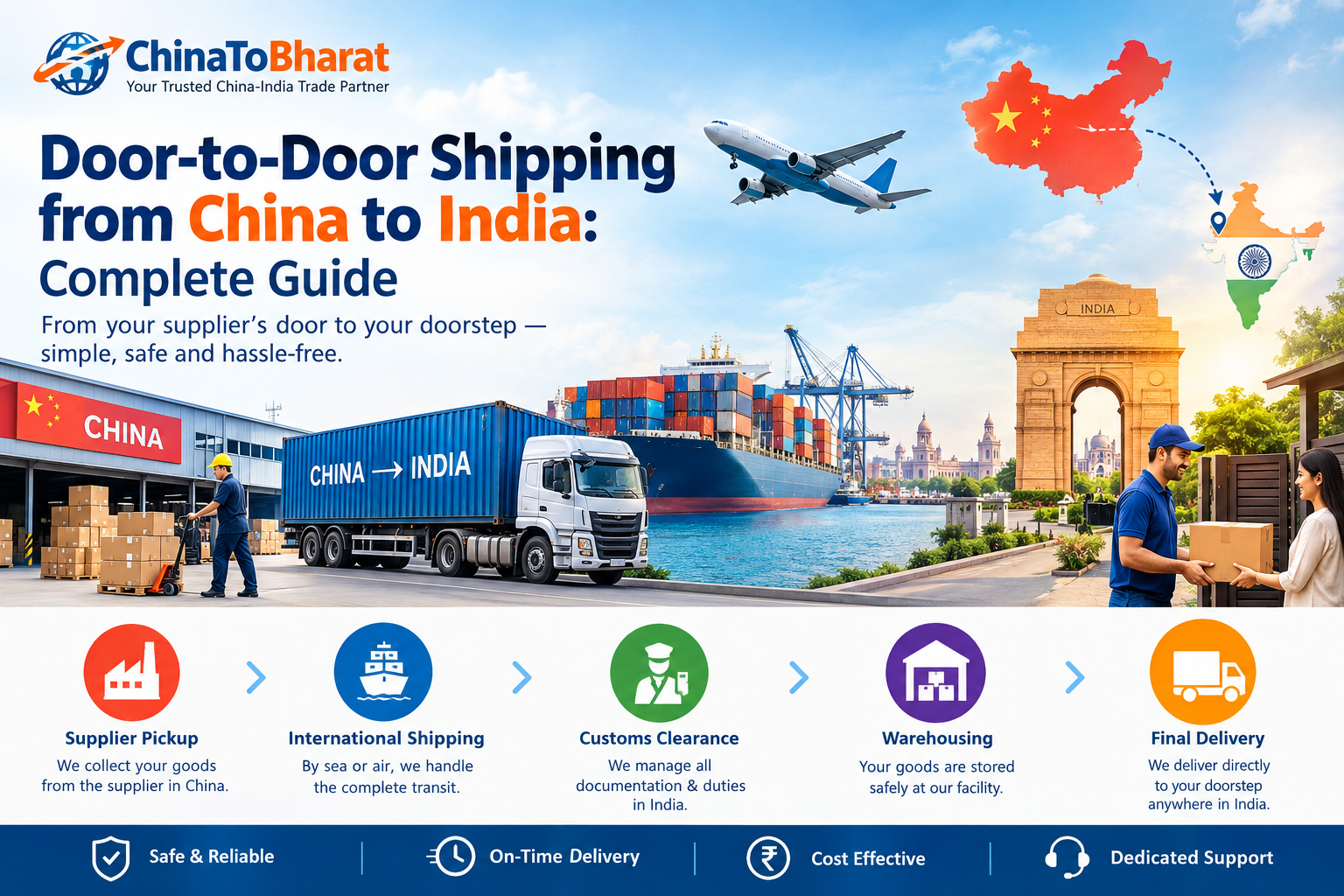
Door-to-door shipping is an end-to-end logistics service in which cargo is collected from the supplier, transported internationally, processed through customs in India, and delivered to the final destination.
A typical shipment involves:
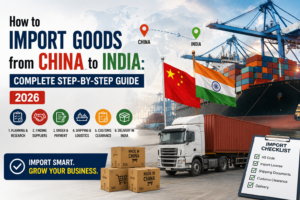
Supplier Pickup → Export Handling → International Transportation → Indian Customs Clearance → Last-Mile Delivery → Customer’s Door
This approach can be particularly useful for businesses that do not want to manage multiple logistics companies or coordinate separately with freight forwarders, customs brokers, transporters, and delivery providers.
For commercial imports, Indian customs procedures still apply. Imported goods generally require customs clearance, and importers may need to submit a Bill of Entry depending on the applicable process.
How Does Door-to-Door Shipping from China to India Work?
The process generally involves several important stages.
1. Supplier Pickup in China
The logistics provider collects the goods from the supplier, factory, warehouse, or trading company in China.
Before pickup, the importer should confirm:
- Product description
- Quantity
- Weight and dimensions
- Packaging
- Commercial value
- Supplier details
- Delivery address in India
Proper information at this stage helps the freight provider select the appropriate shipping method.
2. Export Documentation and Handling
The shipment is prepared for export from China. Depending on the cargo, documentation may include a commercial invoice, packing list, shipping documents, and other certificates or permits where applicable.
Accurate descriptions and values are particularly important because incorrect documentation can create customs delays.
3. International Transportation
The shipment then moves from China to India through the selected transportation method.
The three common options are:
- Air Freight: Suitable for urgent and relatively lightweight shipments.
- Sea Freight: Generally preferred for larger and heavier commercial cargo.
- Express Shipping: Useful for samples, documents, small parcels, and time-sensitive shipments.
The right option depends on cargo volume, weight, delivery deadline, and budget.
4. Customs Clearance in India
After arrival in India, the shipment must undergo the applicable customs clearance process.
For imports, the customs process includes the relevant declaration and assessment procedures. The Department of Revenue explains that importers generally file a Bill of Entry for goods intended for home consumption or warehousing.
Depending on the shipment, customs may require:
- Commercial invoice
- Packing list
- Bill of Entry or applicable courier documentation
- Importer details
- IEC and other applicable registrations
- Product-specific certificates or licenses
- HS classification
- Supporting documents requested by Customs
Requirements can vary depending on the commodity, import method, and applicable regulations.
5. Duty and Tax Payment
Imported goods may be subject to applicable customs duties, IGST, and other charges depending on the product and current regulations.
The exact amount should not be estimated using a single fixed percentage because duty depends on factors such as HS classification, assessable value, country of origin, exemptions, and product-specific regulations.
For courier shipments, applicable customs duty, handling/service charges, and potential demurrage may also arise.
6. Final Delivery in India
Once customs clearance is completed and the shipment is released, the logistics provider arranges transportation to the final delivery address.
This can be a:
- Business office
- Retail store
- Warehouse
- Distribution center
- Residential address
- E-commerce fulfillment location
That final-mile service is what makes the solution truly door-to-door shipping.
Air Freight vs Sea Freight for China to India Shipping
Choosing the right freight mode is one of the most important decisions.
| Shipping Method | Best For | Main Advantage |
|---|---|---|
| Air Freight | Small/medium, urgent cargo | Faster transit |
| Sea Freight FCL | Large shipments | Cost-effective for volume |
| Sea Freight LCL | Smaller commercial cargo | Pay for shared container space |
| Express | Samples/small parcels | Convenient and fast |
Air freight is usually attractive when delivery speed is more important than minimizing transportation cost.
Sea freight is generally better suited to heavier or larger shipments where transit time can be planned in advance.
A reliable freight forwarder can compare available options based on the shipment’s dimensions, weight, product category, destination, and required delivery date.
Documents Required for China to India Imports
Preparing documents correctly can significantly reduce avoidable delays.
Common documents may include:
- Commercial Invoice
- Packing List
- Bill of Lading or Air Waybill
- Importer Exporter Code (IEC), where applicable
- GST-related details, where applicable
- Bill of Entry or applicable courier declaration
- Product certificates or licenses, if required
- Insurance documents, where applicable
- Purchase order or supporting transaction documents
The exact documentation depends on the nature and value of the goods.
Indian Customs states that imported goods are subject to prescribed legal and procedural formalities before clearance.
How Much Does Door-to-Door Shipping from China to India Cost?
There is no single fixed price for door-to-door shipping from China to India.
The total landed cost can depend on:
- Product weight
- Cargo volume
- Chargeable weight
- Shipping method
- Pickup location in China
- Destination city in India
- Product classification
- Customs duties and taxes
- Packaging requirements
- Insurance
- Customs clearance charges
- Warehousing or storage
- Last-mile delivery
- Seasonal freight rates
For this reason, importers should request a detailed quotation rather than comparing only the basic freight rate.
A good quote should clearly explain which services are included and which charges may be payable separately.
Benefits of Door-to-Door Shipping from China to India
1. Convenient Logistics Management
One logistics partner can coordinate multiple stages of transportation, reducing the need to communicate with different service providers.
2. Simplified Customs Coordination
Experienced logistics providers can assist with documentation and coordinate the customs clearance process.
3. Better Shipment Visibility
Tracking can help importers monitor shipment progress from pickup to final delivery.
4. Reduced Coordination
Door-to-door logistics can reduce the operational burden involved in arranging separate pickup, freight, customs, and domestic transportation services.
5. Flexible Shipping Options
Importers can select air or sea transportation according to their delivery requirements and cargo characteristics.
6. Suitable for Different Businesses
Door-to-door shipping can be useful for:
- E-commerce sellers
- Wholesalers
- Manufacturers
- Retailers
- Import-export businesses
- Startups
- Product distributors
- Small and medium-sized businesses
Common Challenges When Importing from China to India
Although door-to-door shipping simplifies logistics, importers should be prepared for potential challenges.
Incorrect HS Code
Incorrect product classification can affect customs assessment and compliance.
Incomplete Documentation
Missing or inconsistent documents may delay customs processing.
Unexpected Charges
Storage, handling, inspection, customs-related expenses, or destination charges can increase the final landed cost.
Product Restrictions
Certain products may require additional approvals, certifications, or licenses before import.
Supplier Packaging Issues
Poor packaging can result in product damage during international transportation.
Working with an experienced freight forwarding and customs-clearance partner can help reduce these risks.
How to Choose the Best China to India Shipping Company
Before selecting a logistics provider, consider:
- Experience with China–India shipments
- Air and sea freight options
- Customs clearance support
- Door-to-door delivery
- Shipment tracking
- Transparent pricing
- Documentation assistance
- Warehousing and consolidation services
- Customer support
- Experience with your product category
Do not select a provider based solely on the cheapest freight quotation. A slightly higher transparent quote may offer better value if it includes important services and reduces unexpected charges.
Tips to Reduce China to India Shipping Costs
Importers can improve logistics efficiency by:
- Comparing air and sea freight
- Consolidating multiple supplier shipments
- Optimizing packaging
- Checking product dimensions before shipping
- Confirming HS codes in advance
- Preparing documents before cargo arrival
- Comparing complete landed costs
- Avoiding unnecessary storage
- Planning shipments outside peak periods where practical
- Choosing the right shipment size and freight method
For regular imports, shipment consolidation can be particularly useful when products are purchased from multiple suppliers.
Why Choose Professional Door-to-Door Logistics?
Managing international freight without experience can involve multiple steps, including supplier coordination, export handling, freight booking, customs clearance, documentation, and domestic transportation.
A professional logistics provider can coordinate these stages under one service structure. This can make the China to India import process more organized and easier to manage.
Modern courier and express systems can also provide electronic customs processing and shipment-status visibility. India’s Express Cargo Clearance System (ECCS), for example, supports electronic processing of courier consignments and operates at multiple international locations, including Hyderabad.
Frequently Asked Questions
1. What is door-to-door shipping from China to India?
It is an end-to-end logistics service that generally covers pickup in China, international transportation, applicable customs clearance coordination, and final delivery to the destination in India.
2. Which is cheaper, air freight or sea freight?
Sea freight is generally more economical for large and heavy shipments, while air freight offers faster transportation. The best option depends on cargo characteristics and delivery requirements.
3. Do I need customs clearance for imports from China?
Yes. Commercial imports generally need to comply with applicable Indian Customs procedures and requirements.
4. How can I reduce China to India shipping costs?
Compare complete landed costs, optimize packaging, consolidate shipments, choose the appropriate freight mode, and prepare customs documentation accurately.
5. Can a logistics company deliver directly to my address in India?
Yes. Door-to-door services are designed to coordinate transportation from the supplier’s location through to the final delivery address, subject to the provider’s service coverage and applicable customs requirements.
Conclusion
Door-to-door shipping from China to India provides a convenient way for importers to manage international cargo from supplier pickup through final delivery. By combining transportation, customs coordination, documentation support, and last-mile delivery, this logistics model can simplify the import process.
For successful China to India shipping, businesses should choose the right freight method, verify supplier and product details, prepare accurate documentation, understand potential customs duties and charges, and work with an experienced logistics partner.
Whether you are importing samples, e-commerce products, machinery, raw materials, or commercial cargo, a well-planned door-to-door logistics solution can help improve shipment visibility, reduce unnecessary coordination, and make international importing more efficient.