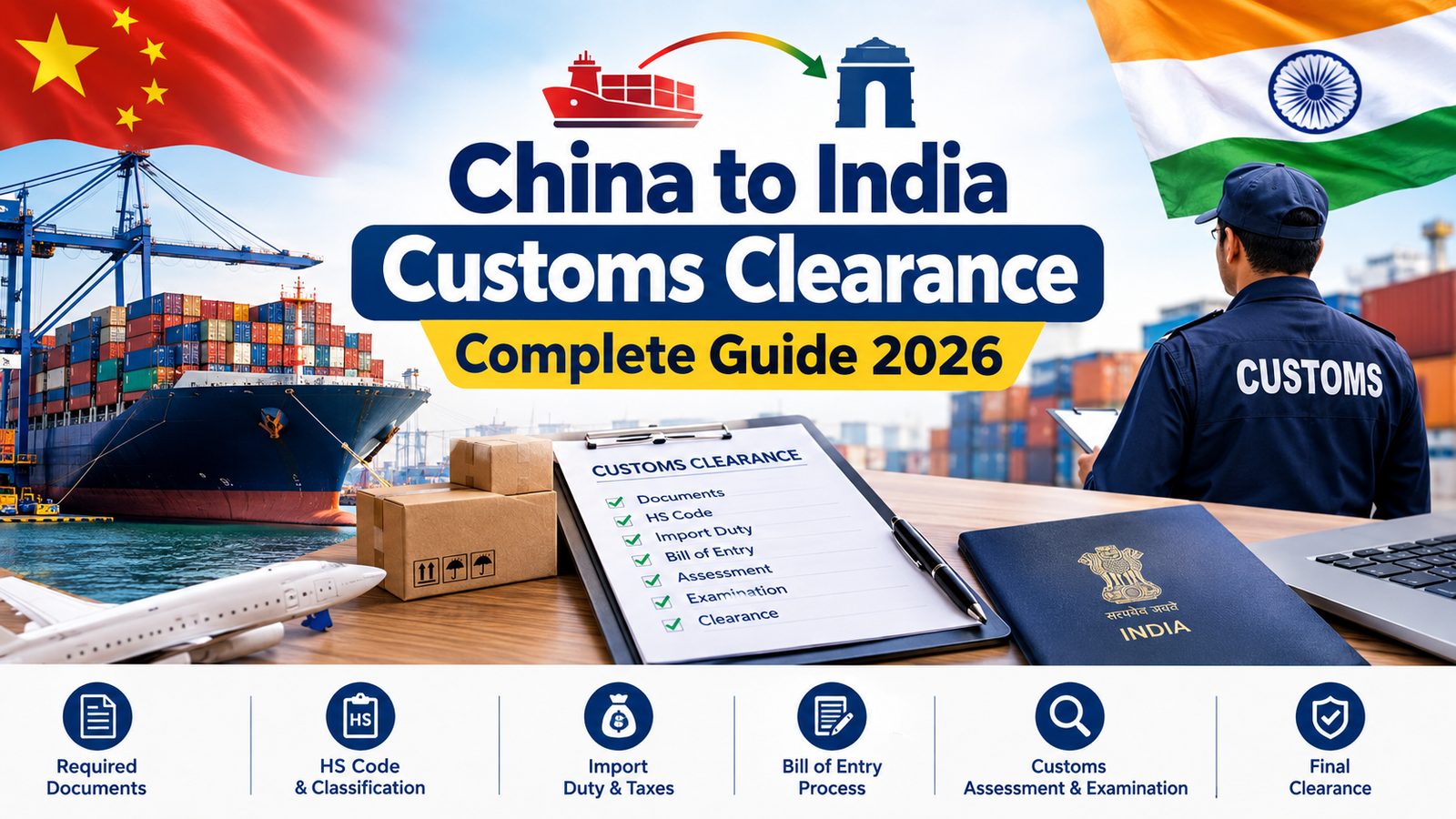
Importing products from China to India can be a profitable opportunity for businesses, wholesalers, retailers, and online sellers. However, China to India customs clearance is one of the most important stages of the import process. Proper documentation, accurate product classification, correct valuation, duty payment, and compliance with Indian regulations can help avoid unnecessary delays and additional costs.
Whether you are importing commercial goods, machinery, electronics, raw materials, or consumer products, understanding the customs clearance process from China to India can make international shipping much easier.
In this guide, we explain the complete process, required documents, import duties, common problems, and practical tips for faster customs clearance in India.
What Is China to India Customs Clearance?
Customs clearance is the official process through which imported goods are declared to Indian Customs, assessed for applicable duties and taxes, checked for regulatory compliance, and released for delivery.
For regular commercial imports, the importer or their authorized customs professional submits the required import declaration, including the Bill of Entry. Under Section 46 of the Customs Act, an importer must make an entry for imported goods electronically through the customs automated system, along with the invoice and other prescribed documents.
Indian Customs uses electronic systems to facilitate import documentation, assessment, payment, examination, and clearance. ICEGATE is the main interface used for electronic customs services.
China to India Customs Clearance Process
The exact process can vary depending on the product, mode of transport, port, applicable regulations, and whether additional government approvals are required. Generally, the process includes the following steps:
1. Prepare the Import Documents
Before your shipment arrives in India, make sure all documents are complete and consistent.
Common documents may include:
- Commercial Invoice
- Packing List
- Bill of Lading or Airway Bill
- Importer Exporter Code (IEC)
- GST-related details, where applicable
- Certificate of Origin, where required
- Insurance documents, where applicable
- Product-specific certificates or licenses
- Technical specifications or product literature, where required
The importer is responsible for ensuring that information submitted in the Bill of Entry is accurate and complete and that supporting documents are authentic and valid.
2. Determine the Correct HS Code
Every imported product needs appropriate classification under the Indian customs tariff system. The HS code helps determine the applicable customs duty, restrictions, exemptions, and other regulatory requirements.
Choosing the wrong HS code can result in:
- Incorrect duty calculation
- Customs queries
- Shipment delays
- Additional documentation
- Possible penalties or reassessment
For this reason, importers should verify the classification before placing a large order from China.
The ICEGATE Compliance Information Portal provides commodity-wise information about customs procedures, applicable requirements, regulatory agencies, and duties and taxes.
3. File the Bill of Entry
The Bill of Entry is one of the most important documents in the import customs clearance process.
It contains information such as:
- Importer details
- Supplier details
- Product description
- Quantity
- Declared value
- HS classification
- Country of origin
- Applicable duties and taxes
- Supporting document references
Indian Customs allows the Bill of Entry to be presented electronically through the customs automated system. It can also be filed before the expected arrival of the shipment within the permitted period.
4. Customs Assessment
After filing, Customs assesses the declaration based on the information provided and applicable regulations.
The assessment may consider:
- Product classification
- Customs value
- Country of origin
- Applicable duty
- Import restrictions
- Required licenses or approvals
- Risk parameters
Some shipments may move through a facilitated process, while others may be selected for further assessment or examination.
Indian Customs has implemented electronic and risk-based systems to support faster and more efficient clearance.
5. Pay Customs Duty and Applicable Taxes
Once the applicable customs duties and taxes are determined, the importer must make the required payment.
The total landed cost of a China import may include several components, such as:
Product Cost + International Freight + Insurance + Customs Duty + Applicable Taxes + Port/Terminal Charges + Customs Clearance Charges + Local Transportation
The exact amount depends on the product classification, customs valuation, applicable notifications, exemptions, and other factors.
Importers should therefore calculate the estimated landed cost before ordering goods from China.
6. Customs Examination
Depending on the risk assessment and shipment requirements, Customs may examine the imported goods.
During examination, officers may verify whether:
- The goods match the declaration
- Quantity is accurate
- Product description is correct
- Packaging corresponds to the documents
- Required markings or labels are present
- Regulatory requirements have been satisfied
Not every shipment necessarily undergoes the same level of physical examination. Customs uses risk-based processing and electronic systems to facilitate legitimate trade.
7. Customs Clearance and Out of Charge
After the necessary assessment, examination, documentation, and payment requirements are completed, Customs can issue the order permitting clearance of goods for home consumption.
Section 47 of the Customs Act provides for clearance after the proper officer is satisfied regarding the goods and applicable payment requirements. The clearance order may also be made electronically through the customs automated system.
After clearance, the shipment can proceed to the importer’s warehouse, distribution center, or final delivery location.
Documents Required for China Import Customs Clearance
Having the correct paperwork ready can significantly reduce delays.
A typical China-to-India import may require:
- Commercial Invoice
- Packing List
- Bill of Lading or Airway Bill
- Bill of Entry
- IEC details
- GST details, where applicable
- Certificate of Origin, when required
- Insurance document, where applicable
- Product-specific licenses or certificates
- Other documents requested based on the commodity
The exact documentation depends on the nature of the goods and applicable Indian regulations.
How Much Does China to India Customs Clearance Cost?
There is no single fixed customs clearance cost for every China import.
The final cost depends on factors including:
- Product value
- HS code
- Customs valuation
- Applicable customs duty
- Integrated tax and other applicable taxes
- Shipment size
- Port of arrival
- Freight charges
- Examination or handling requirements
- Customs broker or logistics service charges
- Local transportation
Therefore, businesses should obtain a shipment-specific quotation rather than relying on a standard percentage.
Common Customs Clearance Problems
Indian importers commonly face delays when documentation or declarations are incomplete or inconsistent.
Some potential problems include:
- Incorrect HS code
- Incorrect product description
- Undervaluation or inconsistent valuation
- Missing documents
- Incorrect quantity or weight
- Restricted products without required approvals
- Mismatch between invoice and packing list
- Missing product certifications
- Customs queries
- Delayed duty payment
The best way to minimize these issues is to prepare documentation before shipment departure and verify the product’s import requirements in advance.
How to Make China to India Customs Clearance Faster
Follow these practical steps:
1. Verify the HS code before ordering.
Make sure your product classification is appropriate.
2. Prepare documents early.
Do not wait until the shipment reaches the Indian port.
3. Use accurate product descriptions.
Avoid vague descriptions such as “parts” or “accessories” when a specific description is required.
4. Maintain consistent information.
Invoice, packing list, shipping documents, and customs declaration should match.
5. Check import restrictions.
Some products may require approvals or compliance with additional government agencies.
6. Work with an experienced customs professional.
A qualified logistics or customs clearance partner can help manage documentation and communication during the clearance process.
Why Choose Professional Customs Clearance Services?
For businesses regularly importing from China, professional customs clearance support can save time and reduce administrative complications.
A logistics partner can assist with documentation, shipment coordination, customs filing, duty-related procedures, examination coordination, and delivery after clearance.
For complex or high-value shipments, professional assistance is particularly useful because import requirements can vary significantly between product categories.
China to India Customs Clearance with China To Bharat
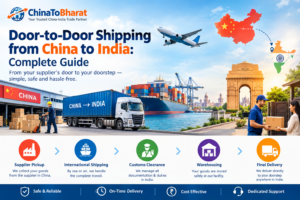
Importing from China does not have to be complicated when the process is properly planned. From supplier documentation and international freight to Bill of Entry, customs assessment, duty payment, examination, clearance, and final delivery, every stage needs careful coordination.
China To Bharat can support businesses with end-to-end logistics solutions for shipments from China to India, including sourcing, freight forwarding, customs clearance, and delivery.
If you are planning your next China import, preparing the correct documents and understanding the customs process before your shipment leaves China can help reduce delays and improve cost control.
Frequently Asked Questions
How long does China to India customs clearance take?
The time can vary depending on the product, documentation, port, assessment, examination, regulatory approvals, and other shipment-specific factors. Complete and accurate documentation can help reduce avoidable delays.
What is the most important document for import customs clearance?
The Bill of Entry is a key import declaration. It is supported by documents such as the commercial invoice, packing list, transport document, and any required product-specific documentation.
Do all China imports undergo physical inspection?
No. Customs processing is risk-based, and the level of assessment or examination can vary according to the shipment and applicable requirements.
Can I track my customs clearance status online?
Various customs-related services and enquiries are available through ICEGATE.
What happens after customs clearance?
Once the required clearance order is issued, the goods can move from the customs station toward the importer’s warehouse or final delivery destination.
Conclusion
China to India customs clearance is a critical part of the international import process. Correct HS classification, accurate valuation, complete documentation, timely Bill of Entry filing, duty payment, and regulatory compliance can help make the process smoother.
Whether you are a first-time importer or an established business importing regularly from China, choosing the right logistics and customs clearance partner can simplify the entire supply chain.
Plan your China import carefully, prepare your documents early, and work with an experienced logistics partner for reliable customs clearance and delivery in India.