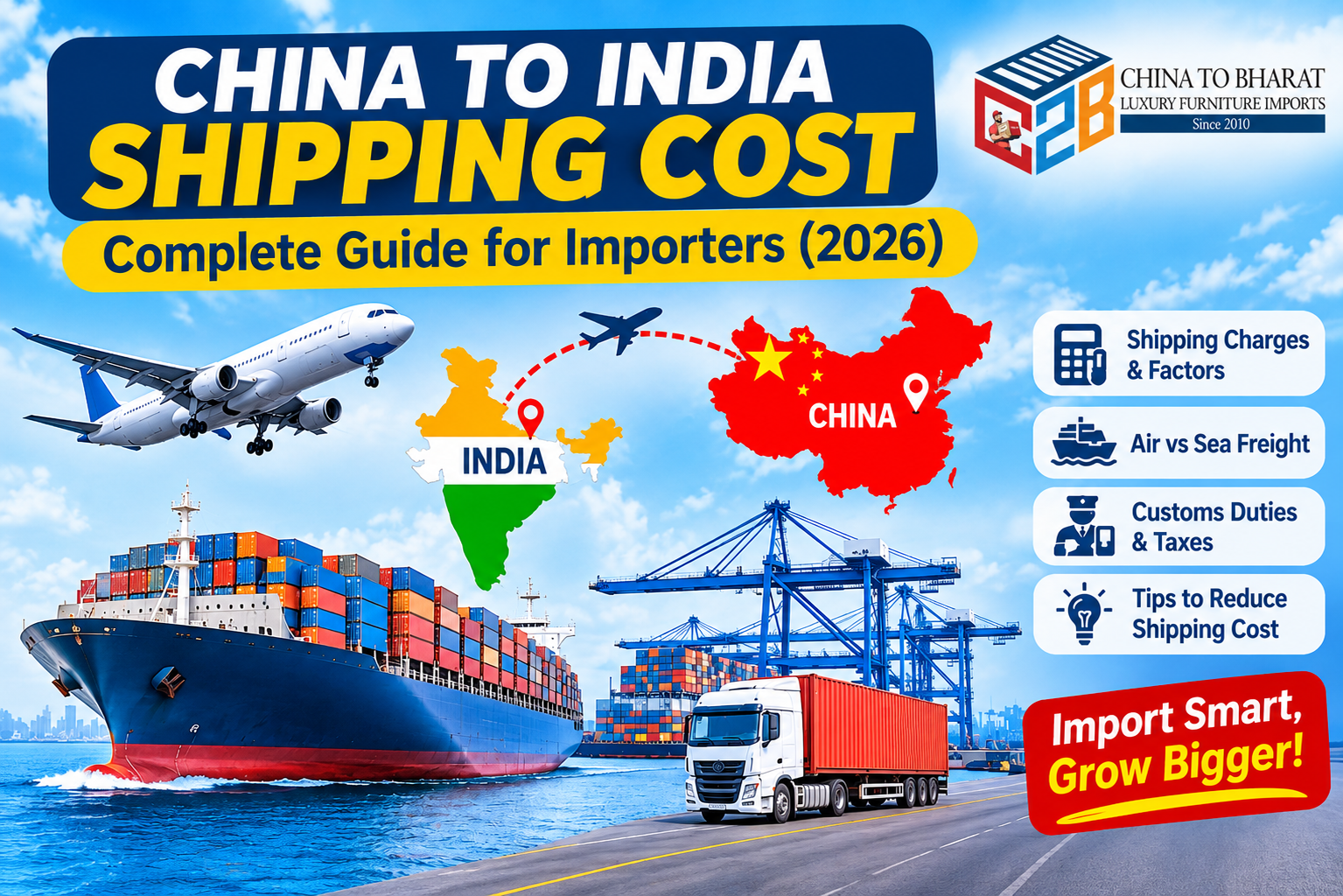
Importing products from China to India has become an important business opportunity for Indian entrepreneurs, wholesalers, manufacturers and e-commerce sellers. China offers a wide range of products at competitive manufacturing prices, making it an attractive sourcing destination for Indian businesses.
However, one of the biggest questions importers face is: How much does shipping from China to India cost?
The total shipping cost depends on several factors, including the shipping method, cargo weight, product dimensions, customs duties, delivery location and freight charges.
In this guide, we explain China to India shipping costs, available transportation methods, customs charges and practical ways to reduce your import expenses.
1. What Is the Shipping Cost from China to India?
The cost of shipping goods from China to India varies depending on the shipment size, cargo type and delivery requirements.
Generally, importers can choose between air freight, sea freight and express courier services.
- Air Freight: Suitable for urgent shipments and medium-sized cargo.
- Sea Freight: Ideal for large-volume and heavy shipments.
- Express Courier: Suitable for small parcels, samples and urgent deliveries.
There is no single fixed shipping rate for every shipment. Importers should request a quotation based on their product details, weight, dimensions and destination.
2. Different Shipping Methods from China to India
Choosing the right shipping method is essential for controlling your logistics expenses.
A. Air Freight from China to India
Air freight is one of the fastest transportation options for importing products from China. It is suitable for electronics, accessories, samples, lightweight products and time-sensitive shipments.
Advantages of Air Freight:
- Faster transportation compared to sea freight.
- Suitable for high-value products.
- Better option for smaller and urgent shipments.
- Reliable scheduling through established cargo networks.
Disadvantages:
- Higher transportation costs.
- Weight and dimensional restrictions.
- Additional airport handling and customs charges may apply.
B. Sea Freight from China to India
Sea freight is generally preferred for bulk shipments, industrial machinery, furniture, raw materials and large commercial orders.
Importers can choose between two major options:
LCL (Less than Container Load): Multiple importers share container space. This option is useful for businesses that do not have enough cargo to fill an entire container.
FCL (Full Container Load): An entire shipping container is reserved for one shipment. It is suitable for large-volume imports.
Advantages of Sea Freight:
- Economical for large shipments.
- Suitable for heavy and bulky cargo.
- Multiple container options.
- Better for businesses importing products regularly in bulk.
Disadvantages:
- Longer transit times.
- Port handling and documentation charges.
- Possible delays due to port congestion, customs inspections or weather conditions.
C. Express Courier Services
Express courier services are useful when businesses need to transport product samples, documents or small packages quickly.
This option is especially helpful for startups testing products before placing larger orders.
3. Factors That Affect China to India Shipping Costs
Several factors influence the final freight quotation.
1. Shipment Weight and Volume
Shipping companies consider actual weight and dimensional weight when calculating air freight charges. Large but lightweight packages may be charged based on volumetric weight.
2. Shipping Method
Air freight, sea freight and express courier services have different pricing structures. Selecting the appropriate method can significantly affect your overall logistics budget.
3. Product Category
Electronics, machinery, chemicals, batteries and fragile products may require special handling, packaging or documentation.
4. Pickup and Delivery Locations
The distance between the Chinese supplier, departure port or airport and the Indian delivery destination can affect transportation expenses.
5. Customs Duties and Taxes
Import duties, IGST and other applicable charges depend on the product’s HS code, customs valuation and current Indian import regulations.
6. Additional Logistics Charges
Other possible expenses include:
- Customs clearance fees.
- Documentation charges.
- Port and terminal handling.
- Warehousing and storage.
- Cargo insurance.
- Last-mile transportation.
Understanding these charges before shipping helps prevent unexpected expenses.
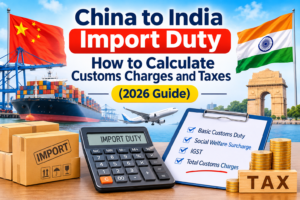
4. Customs Duty and Other Charges When Importing from China
Shipping costs are only one part of the total import expense. Indian importers must also consider applicable customs duties and taxes.
The final customs liability depends on the product classification, assessable value and applicable tariff notifications.
Common import-related charges include:
- Basic Customs Duty (BCD).
- Social Welfare Surcharge (where applicable).
- Integrated Goods and Services Tax (IGST).
- Applicable additional duties or cess, where relevant.
- Customs clearance and handling charges.
Importers should verify the correct HS code and applicable duty rates before placing an order. An Importer Exporter Code (IEC) is generally required for commercial imports, subject to applicable exemptions.
Consult a qualified customs professional or freight forwarder to understand the exact charges for your product.
5. How to Calculate the Total Cost of Importing from China to India
Before confirming a shipment, calculate the complete landed cost rather than considering only the product price and freight charges.
A basic landed cost calculation includes:
Total Landed Cost =
Product Purchase Cost + China Inland Transportation + International Shipping + Insurance + Customs Duties and Taxes + Indian Handling Charges + Final Delivery Cost.
For example, imagine an Indian business purchasing electronic accessories from a Chinese supplier.
The importer should calculate:
- Total product purchase value.
- Transportation from the supplier to the Chinese departure point.
- International freight charges.
- Cargo insurance, if applicable.
- Customs duties and taxes.
- Indian customs clearance and handling.
- Transportation to the final warehouse.
This calculation helps businesses understand the actual investment required and set suitable selling prices.
6. How to Reduce Shipping Costs from China to India
Reducing logistics expenses can improve your business profitability. Here are some practical strategies.
Consolidate Shipments: Combine multiple supplier orders into one shipment whenever practical to reduce repeated transportation and handling expenses.
Choose the Right Shipping Method: Avoid paying premium air freight charges for products that can comfortably travel by sea.
Optimize Packaging: Reduce unnecessary packaging dimensions and use suitable protective materials to avoid excessive volumetric weight.
Compare Freight Quotations: Request quotations from reliable logistics providers and compare the complete charges rather than just the headline freight rate.
Plan Shipments in Advance: Early planning can help businesses avoid urgent transportation expenses.
Verify Suppliers: Work with reliable manufacturers who provide accurate product specifications, proper packing and complete documentation.
7. Documents Required for Shipping from China to India
Proper documentation helps ensure a smoother import and customs clearance process.
Commonly required documents include:
- Commercial Invoice.
- Packing List.
- Bill of Lading or Airway Bill.
- Importer Exporter Code (IEC).
- Bill of Entry.
- Certificate of Origin, when required.
- Product-specific certificates or approvals, where applicable.
Requirements vary depending on the product category and applicable regulations.
8. Why Choose a Reliable China to India Shipping Partner?
Working with an experienced logistics partner can make international importing easier for businesses.
A dependable shipping partner can help with cargo coordination, transportation planning, shipment consolidation, documentation support and delivery arrangements.
For Indian businesses importing regularly, choosing the right logistics partner can save time, improve shipment visibility and help manage transportation expenses.
ChinaToBharat helps businesses explore China-to-India shipping and sourcing solutions based on their cargo and delivery requirements.
Whether you are a startup, wholesaler, manufacturer or established importer, selecting the right logistics solution is an important step towards successful international trade.
Frequently Asked Questions (FAQs)
1. How much does it cost to ship from China to India?
Shipping costs depend on cargo weight, volume, shipping method, product category and destination. Request a customized quotation for accurate pricing.
2. Which is cheaper: air freight or sea freight from China to India?
Sea freight is generally more economical for large and heavy shipments, while air freight is faster and suitable for urgent or smaller shipments.
3. How many days does shipping from China to India take?
Transit time varies depending on the shipping method, route, customs clearance and final delivery location. Express courier is generally faster than air freight, while sea freight takes longer.
4. What documents are required to import goods from China to India?
Common documents include a commercial invoice, packing list, Bill of Lading or Airway Bill, IEC and Bill of Entry. Additional certificates may be required for regulated products.
5. Can small businesses import products from China to India?
Yes. Small businesses can import products by choosing suitable shipment sizes, using LCL or courier services and understanding the applicable import regulations.
Conclusion
Understanding China to India shipping costs is essential for every business planning to import products from China. Choosing between air freight, sea freight and express courier services, calculating customs duties and managing additional logistics expenses can help businesses control their overall import budget.
The best shipping solution depends on your cargo size, delivery timeline, product category and business requirements.
Looking for a reliable way to ship products from China to India?