



About Us
China to Bharat is the only professional group of companies who can be your import export agents from China to India imports for full or loose container cargo load.
Gallery
Social Account



China to India Shipping Process Explained (2026 Guide)
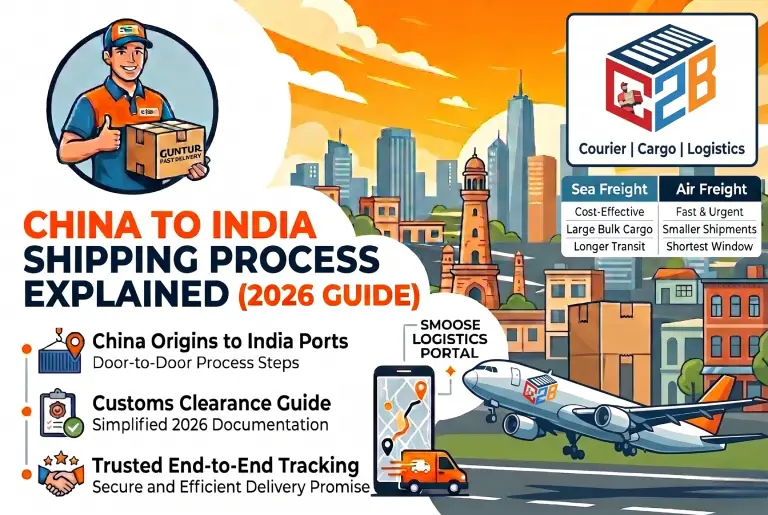
China to India Shipping Process Explained (2026 Guide)
Importing goods from China to India has become a smart and profitable business strategy. From electronics and machinery to clothing and accessories, Indian businesses rely heavily on Chinese suppliers for cost-effective products.
However, for beginners, the shipping process can feel complicated. There are multiple steps, documents, and regulations involved.
This guide explains the complete China to India shipping process in simple terms, so you can understand each stage and avoid common mistakes.
🚚 Step 1: Find a Reliable Supplier
The first step in the import process is choosing the right supplier. Most Indian importers use platforms like Alibaba and 1688.
Tips to choose a good supplier:
- Check ratings and reviews
- Ask for product samples
- Verify certifications and business license
- Communicate clearly about product details
👉 Never rush this step. A reliable supplier ensures quality and smooth shipping.
📦 Step 2: Confirm Product Details & Pricing
Once you finalize a supplier, the next step is to confirm:
- Product specifications
- Quantity
- Price per unit
- Packaging details
Always request a Proforma Invoice (PI). This document includes all important details of the order and helps avoid misunderstandings later.
📄 Step 3: Prepare Required Documents
Documentation is a critical part of the shipping process. Missing documents can delay your shipment at customs.
Essential documents include:
- Commercial Invoice
- Packing List
- Bill of Lading (for sea) / Airway Bill (for air)
- Import Export Code (IEC)
- GST Registration
👉 Make sure all documents are accurate and match your shipment details.
🚢 Step 4: Choose the Right Shipping Method
You can ship goods from China to India using three main methods:
✈️ Air Freight
- Fast delivery (ideal for urgent shipments)
- Higher cost
- Suitable for lightweight and high-value items
🚢 Sea Freight
- Cost-effective for bulk shipments
- Takes longer time
- Ideal for heavy goods
📦 Courier Services
- Easy door-to-door delivery
- Best for small parcels and samples
- Handled by companies like DHL and FedEx
👉 Choose based on your budget, urgency, and shipment size.
🏷️ Step 5: Understand Incoterms
Incoterms define who is responsible for shipping, insurance, and risk.
Common Incoterms:
- EXW (Ex Works): Buyer handles everything
- FOB (Free on Board): Supplier delivers goods to port
- CIF (Cost, Insurance, Freight): Supplier manages shipping and insurance
👉 Always clarify Incoterms before placing your order to avoid confusion.
🛃 Step 6: Customs Clearance in India
Once your goods arrive in India, they must pass through customs clearance.
This process is managed by the Central Board of Indirect Taxes and Customs.
Charges you may pay:
- Basic Customs Duty (BCD)
- IGST (Integrated GST)
- Social Welfare Surcharge
- Handling charges
👉 Hiring a customs broker can simplify this step and prevent delays.
🚛 Step 7: Delivery to Your Location
After customs clearance, your goods are released for final delivery.
- For sea freight → Delivered via local transport
- For courier → Delivered directly to your doorstep
👉 This is the final stage of the shipping process.
⏱️ Shipping Timeline (Approximate)
Here’s a general idea of how long each step takes:
- Supplier processing: 3–7 days
- Air shipping: 3–7 days
- Sea shipping: 20–40 days
- Customs clearance: 2–5 days
👉 Timelines may vary depending on location, season, and customs checks.
💰 Cost Breakdown (What You Should Expect)
Your total import cost includes:
- Product cost
- Shipping charges
- Customs duty
- GST
- Handling and clearance charges
👉 Always calculate total landed cost before placing an order.
⚠️ Common Mistakes to Avoid
Many beginners make these mistakes:
- Choosing the cheapest supplier without verification
- Ignoring hidden costs
- Incorrect documentation
- Not checking product quality before shipping
- Lack of understanding of customs rules
👉 Avoiding these mistakes can save you time and money.
💡 Pro Tips for Smooth Shipping
- Start with small orders
- Use a reliable freight forwarder
- Track your shipment regularly
- Maintain clear communication with suppliers
- Plan for delays during peak seasons
📈 Why Import from China?
China remains a top choice for importers because:
- Low manufacturing costs
- Wide product variety
- Advanced production capabilities
- Competitive pricing
👉 This makes importing a profitable business opportunity in India.
📝 Conclusion
The China to India shipping process may seem complex at first, but once you understand each step, it becomes much easier to manage. From selecting a supplier to customs clearance and final delivery, every stage plays an important role in ensuring a successful import.
By planning properly, choosing the right shipping method, and working with trusted partners, you can streamline your import process and grow your business with confidence.
❓ FAQs
1. How long does shipping from China to India take?
It depends on the shipping method. Air is faster, while sea freight takes longer.
2. Do I need a license to import from China?
Yes, you need an Import Export Code (IEC) issued in India.
3. What is the cheapest shipping method?
Sea freight is the most cost-effective for large shipments.
4. Can beginners import from China?
Yes, beginners can start with small orders and scale gradually.
5. What is the biggest challenge in importing?
Customs clearance and documentation are the most common challenges.


