



About Us
China to Bharat is the only professional group of companies who can be your import export agents from China to India imports for full or loose container cargo load.
Gallery
Social Account



How to Import Products from China to India (Step-by-Step Guide 2026)
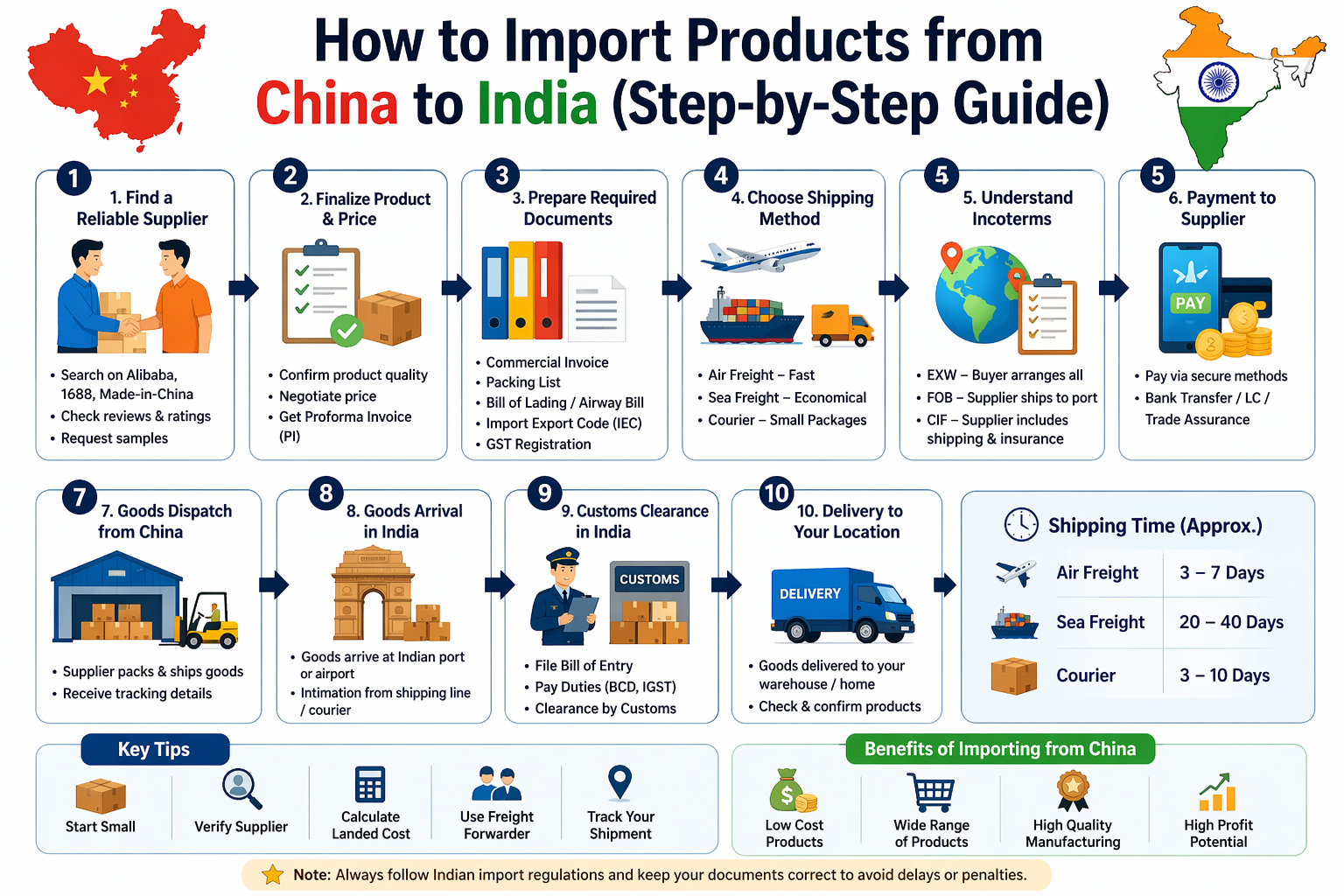
How to Import Products from China to India (Step-by-Step Guide)
Importing products from China to India has become a powerful strategy for entrepreneurs, eCommerce sellers, and established businesses looking to reduce costs and access a wide variety of goods. China is known as the world’s manufacturing hub, offering competitive pricing, scalable production, and a vast supplier network. However, importing involves multiple steps, legal requirements, and logistical decisions.
This comprehensive step-by-step guide will walk you through everything you need to know to successfully import products from China to India.
Step 1: Decide What Products to Import
The first and most important step is selecting the right product.
Factors to Consider:
- Market Demand: Research trending and high-demand products in India
- Profit Margin: Ensure the landed cost allows for profit
- Competition: Analyze existing competitors
- Import Restrictions: Check if the product is restricted or prohibited
Popular Import Categories:
- Electronics and accessories
- Machinery and tools
- Fashion and textiles
- Home decor and furniture
Choosing the right product can determine the success or failure of your import business.
Step 2: Find Reliable Suppliers in China
Once you finalize the product, the next step is sourcing a trustworthy supplier.
Where to Find Suppliers:
- B2B platforms like Alibaba, Made-in-China
- Trade fairs and exhibitions
- Sourcing agents in China
How to Verify Suppliers:
- Check company certifications
- Read reviews and ratings
- Request product samples
- Conduct background checks
Always communicate clearly about product specifications, pricing, and delivery timelines.
Step 3: Apply for Importer Exporter Code (IEC)
To legally import goods into India, you must obtain an Importer Exporter Code (IEC) from the Directorate General of Foreign Trade (DGFT).
Why IEC is Important:
- Mandatory for commercial imports
- Required for customs clearance
- Helps in tracking import-export transactions
You can apply for IEC online with basic documents like PAN card, bank details, and business registration.
Step 4: Understand Import Regulations and Duties
Before placing an order, you must understand Indian import laws.
Key Components:
- HS Code: Classification code for products
- Customs Duty: Varies by product category
- GST (IGST): Applied on imported goods
- Import Policies: Some items require special licenses
You can check duty rates on the Indian Customs website.
Step 5: Negotiate Pricing and Terms
Negotiation plays a crucial role in importing.
What to Negotiate:
- Product price
- Minimum Order Quantity (MOQ)
- Payment terms
- Delivery timeline
- Packaging standards
Common Payment Terms:
- 30% advance, 70% before shipment
- Letter of Credit (for large transactions)
- PayPal or escrow (for smaller orders)
Always get everything documented in a Proforma Invoice.
Step 6: Choose the Right Shipping Method
Shipping method depends on your budget and urgency.
1. Air Freight
- Fast delivery (3–7 days)
- Higher cost
- Suitable for small, high-value goods
2. Sea Freight
- Economical for bulk shipments
- Slower delivery (20–35 days)
- Ideal for heavy cargo
3. Courier Services
- Best for small packages
- Easy tracking
- Limited weight capacity
Step 7: Hire a Freight Forwarder
A freight forwarder simplifies the entire shipping process.
Services Provided:
- Cargo pickup from supplier
- Documentation handling
- Customs clearance
- Delivery to your location
Choosing a reliable logistics partner ensures smooth operations and fewer delays.
Step 8: Prepare Required Documents
Documentation is critical for successful import.
Essential Documents:
- Commercial Invoice
- Packing List
- Bill of Lading / Airway Bill
- IEC Certificate
- GST Registration
- Certificate of Origin (if required)
Incorrect documentation can cause delays or penalties.
Step 9: Customs Clearance in India
Once the goods arrive in India, they must pass through customs.
Process:
- Filing Bill of Entry
- Document verification
- Duty payment
- Inspection (if required)
- Clearance
Your customs broker or freight forwarder usually handles this process.
Step 10: Delivery to Your Location
After clearance, goods are transported to your warehouse, office, or doorstep.
This is often included in door-to-door shipping services, making the process hassle-free.
Step 11: Calculate Total Landed Cost
Understanding the total cost is essential for profitability.
Components of Landed Cost:
- Product cost
- Shipping charges
- Customs duty
- GST
- Handling and logistics fees
Accurate cost calculation helps in pricing your products correctly.
Step 12: Inspect and Quality Check
Once you receive the goods:
- Check product quality
- Verify quantity
- Report damages immediately
You can also hire third-party inspection services before shipment.
Common Challenges in Importing
1. Supplier Fraud
Solution: Verify suppliers and avoid full upfront payments.
2. Shipping Delays
Solution: Plan ahead and work with reliable logistics partners.
3. Customs Issues
Solution: Ensure accurate documentation and compliance.
4. Hidden Costs
Solution: Ask for all-inclusive quotes from your freight forwarder.
Tips for Successful Importing
- Start with small orders
- Build long-term supplier relationships
- Stay updated with import regulations
- Use secure payment methods
- Always insure your shipment
Benefits of Importing from China
- Lower manufacturing costs
- Wide product variety
- Scalable production
- Access to global markets
Conclusion
Importing products from China to India can be highly profitable if done correctly. By following a structured approach—starting from product selection to final delivery—you can minimize risks and maximize returns.
The key to success lies in choosing the right supplier, understanding regulations, managing costs, and partnering with a reliable logistics provider. Whether you are a beginner or an experienced importer, mastering these steps will help you build a successful import business.
Top FAQs
1. What is the minimum investment required to import from China to India?
You can start with around ₹20,000–₹50,000 for small shipments. The investment depends on product type, quantity, and shipping method.
2. Do I need an Importer Exporter Code (IEC)?
Yes, an IEC is mandatory for commercial imports. It is issued by the Directorate General of Foreign Trade and is required for customs clearance.
3. How long does shipping take from China to India?
- Air Freight: 3–7 days
- Sea Freight: 20–35 days
- Courier: 5–10 days
Timelines vary based on logistics and customs processing.
4. How can I find reliable suppliers in China?
Use trusted platforms like Alibaba, verify certifications, check reviews, and always order samples before placing bulk orders.
5. What taxes are involved when importing goods into India?
You need to pay:
- Customs Duty (based on product)
- IGST (GST on imports)
- Additional charges if applicable


