



About Us
China to Bharat is the only professional group of companies who can be your import export agents from China to India imports for full or loose container cargo load.
Gallery
Social Account



Road Transport Process Explained Step-by-Step: Complete Logistics & Freight Guide (2026)
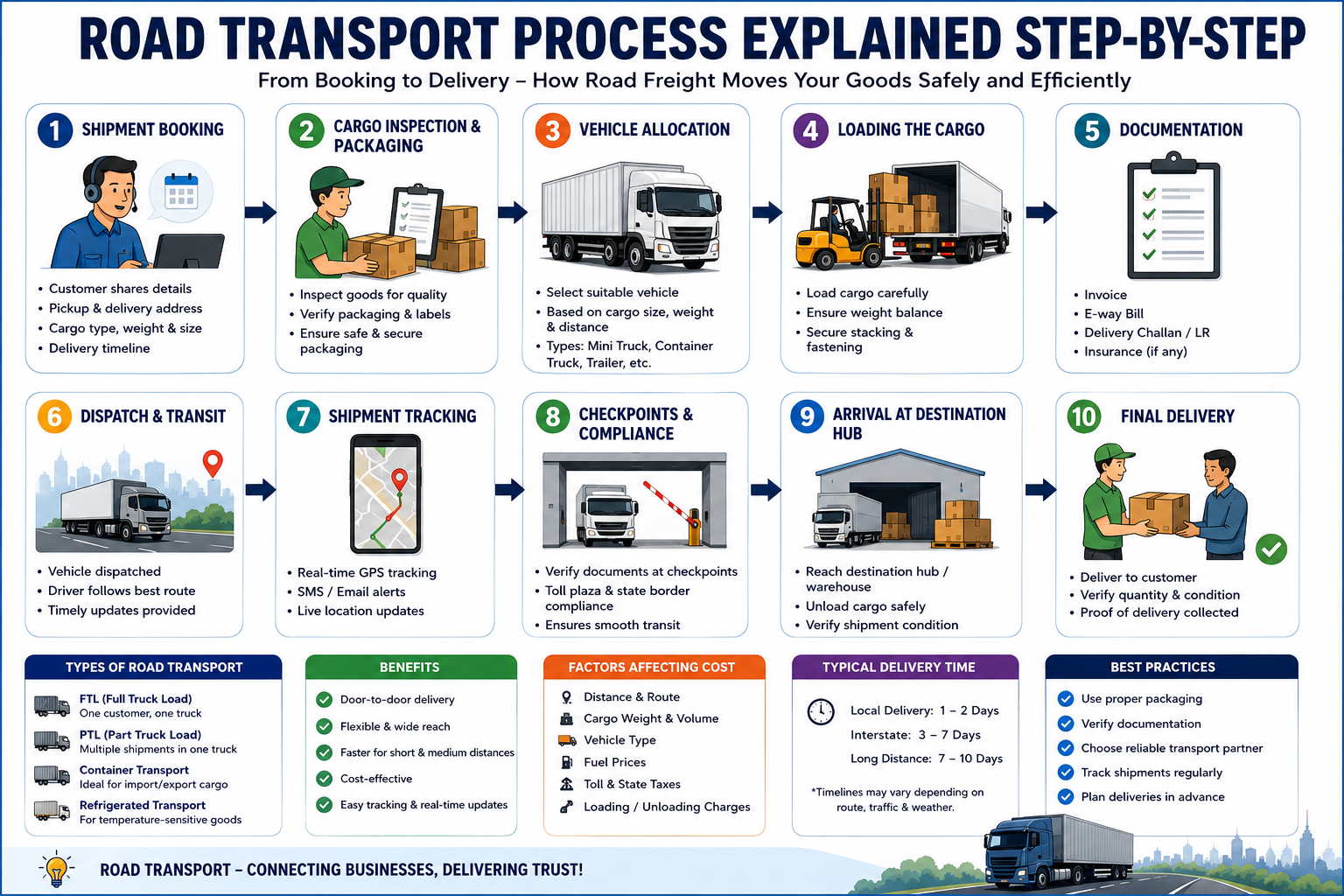
Road Transport Process Explained Step-by-Step (Complete Guide 2026)
Road transport plays a major role in logistics and supply chain management. From local deliveries to interstate cargo movement, trucks and commercial vehicles help move goods efficiently across cities, ports, warehouses, and businesses.
In India, road transport is one of the most widely used shipping methods because it offers flexibility, faster regional delivery, and door-to-door service.
Whether you are a business owner, importer, or logistics beginner, understanding the road transport process can help you manage shipments more efficiently and reduce delivery delays.
In this guide, you’ll learn the complete road transport process step-by-step, including booking, documentation, tracking, delivery, and best practices.
🚚 What is Road Transport?
Road transport refers to moving goods using trucks, trailers, vans, or commercial vehicles through road networks.
It is commonly used for:
- Local delivery
- Interstate cargo movement
- Port-to-warehouse transportation
- Last-mile delivery
- Industrial logistics
Road transport is an essential part of the supply chain because almost every shipment eventually reaches its destination by road.
🌍 Importance of Road Transport
Road freight is important because it provides:
- Door-to-door delivery
- Flexible routes
- Faster short-distance transport
- Easy tracking and accessibility
- Lower infrastructure dependency
It connects:
- Ports
- Airports
- Warehouses
- Factories
- Retail stores
📦 Types of Road Transport Services
1. Full Truck Load (FTL)
One customer uses the entire truck.
Best for:
- Large shipments
- Faster delivery
- High-volume cargo
2. Part Truck Load (PTL)
Multiple customers share truck space.
Best for:
- Small shipments
- Lower transportation cost
3. Container Truck Transport
Used for:
- Port cargo
- Import/export logistics
- Secure transportation
4. Refrigerated Transport
Special temperature-controlled vehicles used for:
- Food products
- Medicines
- Perishable goods
🔄 Road Transport Process Step-by-Step
Step 1: Shipment Booking
The process starts when the customer books transportation services.
Information required includes:
- Pickup address
- Delivery destination
- Cargo weight and dimensions
- Product category
- Delivery timeline
Logistics providers like ChinaToBharat help arrange transport efficiently.
Step 2: Cargo Inspection and Packaging
Before transportation:
- Goods are inspected
- Packaging is verified
- Labels are checked
Proper packaging is important to prevent:
- Damage
- Leakage
- Moisture exposure
Step 3: Vehicle Allocation
Based on cargo size and weight, a suitable vehicle is assigned.
Common vehicles include:
- Mini trucks
- Container trucks
- Trailers
- Flatbed trucks
The vehicle type depends on:
- Shipment volume
- Distance
- Cargo nature
Step 4: Loading the Cargo
Goods are loaded carefully into the vehicle.
Important practices:
- Weight balancing
- Proper stacking
- Secure fastening
Fragile goods may require additional protection.
Step 5: Documentation Process
Road transport requires certain shipping documents.
Common documents include:
- Invoice
- E-way bill
- Delivery challan
- LR (Lorry Receipt)
- Insurance papers
Accurate documentation helps avoid transit delays.
Step 6: Dispatch and Transit
Once loaded, the vehicle begins transportation.
During transit:
- Drivers follow planned routes
- GPS systems monitor movement
- Logistics teams coordinate updates
Road transport routes may include:
- Highways
- Industrial corridors
- State roads
Step 7: Shipment Tracking
Modern logistics companies provide real-time tracking.
Tracking methods include:
- GPS tracking
- SMS updates
- Tracking portals
This helps businesses monitor delivery progress.
Step 8: Checkpoints and Compliance
During transportation, trucks may pass:
- Toll plazas
- State border checkpoints
- Compliance inspections
Authorities verify:
- Vehicle permits
- E-way bills
- Cargo documents
Proper paperwork ensures smooth transit.
Step 9: Arrival at Destination Hub
The shipment reaches:
- Warehouse
- Distribution center
- Retail location
- Customer address
The cargo is unloaded carefully.
Step 10: Final Delivery
The shipment is delivered to the customer.
The receiver verifies:
- Product condition
- Quantity
- Delivery documents
Once confirmed, delivery is completed.
⏱️ Delivery Time in Road Transport
Transit time depends on:
- Distance
- Traffic conditions
- Weather
- Route quality
Typical timelines:
- Local delivery: Same day or 1–2 days
- Interstate delivery: 3–7 days
- Long-distance cargo: 7–10 days
💰 Factors Affecting Road Transport Cost
Transportation cost depends on:
- Fuel prices
- Distance
- Vehicle type
- Cargo weight
- Toll charges
- Loading and unloading
FTL shipments generally cost more than PTL but offer faster delivery.
📦 Advantages of Road Transport
✔ Door-to-Door Service
Direct delivery without additional handling.
✔ Flexible Routes
Vehicles can reach remote locations.
✔ Faster Regional Delivery
Ideal for short and medium distances.
✔ Easy Shipment Tracking
Modern GPS systems improve visibility.
✔ Suitable for Many Cargo Types
Can transport consumer goods, machinery, retail products, and industrial cargo.
⚠️ Challenges in Road Transport
Common issues include:
- Traffic congestion
- Weather disruptions
- Fuel price fluctuations
- Road conditions
- Vehicle breakdowns
Planning and route optimization help reduce delays.
🚛 Role of Road Transport in Import Logistics
Road transport is critical in import operations.
It is used for:
- Port-to-warehouse movement
- Inland cargo transportation
- Last-mile delivery
After customs clearance, imported cargo is usually transported by truck to the final destination.
📈 Technology in Modern Road Logistics
Modern logistics companies use:
- GPS tracking
- Route optimization software
- Digital documentation
- Fleet management systems
These technologies improve efficiency and reduce operational costs.
💡 Tips for Efficient Road Transport
✔ Use Proper Packaging
Protect goods during transit.
✔ Verify Documentation
Avoid delays at checkpoints.
✔ Choose Reliable Logistics Partners
Experienced transport providers reduce risks.
✔ Plan Deliveries Early
Avoid peak traffic and delays.
✔ Track Shipments Regularly
Monitor cargo movement in real time.
🚀 Future of Road Transport in India
India’s logistics sector continues to grow rapidly due to:
- Highway development
- Digital logistics systems
- Growing eCommerce demand
- Infrastructure improvements
Road transport will remain one of the most important components of the Indian supply chain.
📝 Conclusion
Road transport is one of the most flexible and essential logistics solutions for businesses. From local deliveries to interstate cargo movement, it connects suppliers, warehouses, ports, and customers efficiently.
Understanding the complete road transport process helps businesses reduce delays, improve delivery efficiency, and manage logistics costs more effectively.
With proper planning, accurate documentation, and reliable transport partners, road freight can become a highly dependable part of your supply chain.
❓ Frequently Asked Questions
What is road transport in logistics?
Road transport refers to moving goods using trucks and commercial vehicles through road networks.
What is the difference between FTL and PTL?
FTL uses a full truck for one shipment, while PTL shares truck space among multiple shipments.
How long does road transport take?
Delivery time depends on distance and route conditions. Interstate transport usually takes 3–7 days.
What documents are required for road transport?
Common documents include invoices, E-way bills, Lorry Receipts, and insurance papers.
Why is road transport important?
It enables flexible, door-to-door delivery and supports regional and national supply chains.


