



About Us
China to Bharat is the only professional group of companies who can be your import export agents from China to India imports for full or loose container cargo load.
Gallery
Social Account



Shipping Cost from China to India in 2026: Complete Guide to Freight, Customs Duty & Total Landed Cost
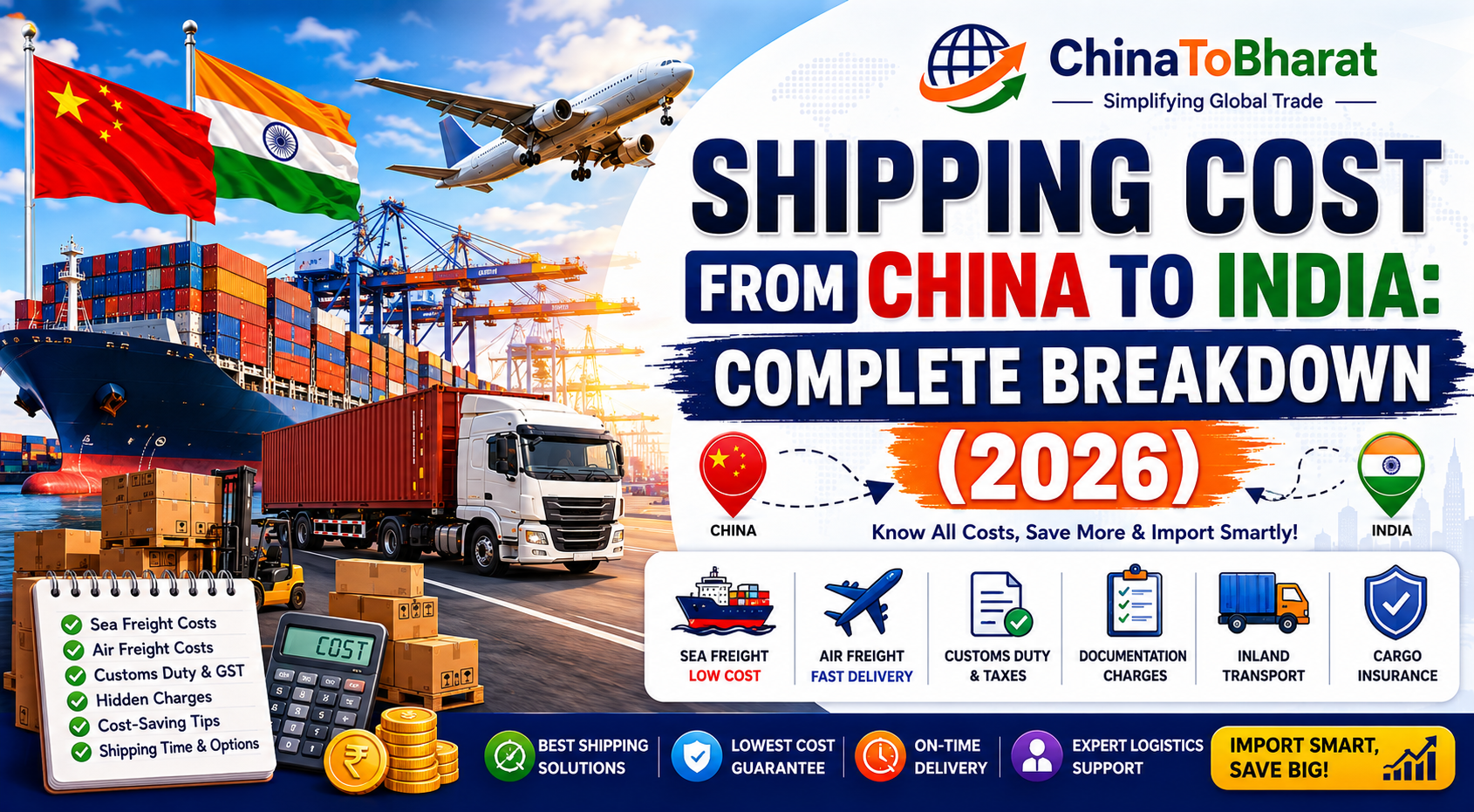
Shipping Cost from China to India: Complete Breakdown (2026)
Importing products from China to India can be highly profitable, but understanding shipping costs is crucial for calculating your actual profit margins. Many new importers focus only on product prices and overlook shipping expenses, customs duties, taxes, and logistics charges.
Whether you’re importing electronics, machinery, consumer goods, or eCommerce products, knowing the complete shipping cost breakdown helps you make informed business decisions and avoid unexpected expenses.
This guide explains all the major cost components involved in shipping from China to India in 2026.
🚢 Why Understanding Shipping Costs Matters
Shipping costs directly impact:
- Product profitability
- Pricing strategy
- Inventory planning
- Business growth
- Customer competitiveness
A clear understanding of logistics expenses helps importers calculate their true landed cost before placing an order.
📦 Main Factors Affecting Shipping Costs
Several factors determine the total cost of shipping goods from China to India.
Shipment Weight
Heavier cargo generally costs more to transport.
Shipment Volume
Shipping companies often charge based on volumetric weight for lightweight but bulky products.
Shipping Method
Costs vary significantly between:
- Sea Freight
- Air Freight
- Courier Services
Cargo Type
Special cargo may require additional handling.
Destination
Shipping to Mumbai, Chennai, Hyderabad, Delhi, or other cities may involve different transportation costs.
Seasonal Demand
Peak seasons often result in higher freight rates.
🚢 Sea Freight Costs
Sea freight is usually the most economical option for larger shipments.
Best For:
- Bulk cargo
- Heavy goods
- Commercial imports
Typical Transit Time:
20–40 days
Cost Components:
- Ocean freight
- Port handling charges
- Documentation fees
- Customs clearance
- Inland transportation
Advantages:
✔ Lowest shipping cost per unit
✔ Suitable for large-volume imports
✔ Reliable for regular shipments
FCL Shipping Costs
FCL (Full Container Load) means you use an entire container.
Common container sizes:
- 20-foot container
- 40-foot container
Best For:
- Large orders
- Higher security
- Faster handling
LCL Shipping Costs
LCL (Less than Container Load) allows multiple importers to share container space.
Best For:
- Small businesses
- Lower shipment volumes
- Product testing
Additional Charges:
- Consolidation fees
- Deconsolidation fees
- Warehouse handling charges
✈️ Air Freight Costs
Air freight is significantly faster than sea freight but costs more.
Best For:
- Urgent shipments
- High-value products
- Time-sensitive inventory
Transit Time:
3–7 days
Air Freight Charges Include:
- Air cargo rates
- Security fees
- Fuel surcharges
- Airport handling fees
- Customs clearance
Advantages:
✔ Fast delivery
✔ Reduced inventory delays
✔ Better for premium products
📦 Courier Shipping Costs
Courier services are commonly used for:
- Samples
- Small shipments
- Documents
- eCommerce products
Popular courier providers include:
- DHL
- FedEx
- UPS
Delivery Time:
5–10 days
Benefits:
✔ Door-to-door service
✔ Easy tracking
✔ Customs support
📄 Customs Duty Costs
Every shipment imported into India is subject to customs duties.
Import charges depend on:
- Product category
- HS Code
- Product value
- Applicable regulations
The customs process is managed by the Central Board of Indirect Taxes and Customs.
💰 GST on Imports
Imported products are also subject to GST.
GST rates vary based on:
- Product category
- Applicable tax classification
Importers should factor GST into their total landed cost calculations.
📑 Documentation Charges
Shipping involves several documents.
Common documentation costs include:
- Commercial Invoice preparation
- Packing List
- Bill of Lading
- Customs filing fees
- Delivery orders
Missing documentation can lead to delays and penalties.
🚛 Inland Transportation Costs
After customs clearance, cargo must be delivered to its final destination.
Transportation costs depend on:
- Distance
- Cargo size
- Delivery location
- Vehicle type
Road transport charges are commonly added to total import costs.
🛡️ Cargo Insurance Costs
Although optional, cargo insurance is highly recommended.
Insurance helps protect against:
- Cargo damage
- Theft
- Loss during transit
- Natural disasters
The insurance premium is usually a small percentage of shipment value.
⚓ Port Handling Charges
When cargo arrives at an Indian port, additional charges may apply.
These include:
- Terminal handling charges
- Container handling fees
- Storage charges
- Port service fees
Long delays may increase storage costs.
📊 Example Shipping Cost Breakdown
Suppose you import products worth ₹2,00,000.
Estimated Cost Structure:
| Expense | Example Cost |
|---|---|
| Product Cost | ₹2,00,000 |
| Freight Charges | ₹25,000 |
| Customs Duty | ₹30,000 |
| GST | ₹36,000 |
| Documentation | ₹5,000 |
| Inland Transport | ₹8,000 |
| Insurance | ₹2,000 |
Total Landed Cost:
₹3,06,000
This example shows why calculating only product cost can be misleading.
🔍 Hidden Costs Many Importers Forget
Common overlooked expenses include:
- Bank transfer fees
- Currency conversion charges
- Port storage fees
- Customs inspection charges
- Demurrage charges
- Packaging upgrades
Always include contingency costs in your budget.
💡 How to Reduce Shipping Costs
Consolidate Shipments
Combining multiple orders often reduces transportation costs.
Choose Sea Freight for Bulk Cargo
Sea freight is generally more economical than air freight.
Optimize Packaging
Efficient packaging reduces volumetric weight charges.
Plan Orders Early
Avoid expensive urgent shipments.
Work with Experienced Logistics Providers
Freight experts such as ChinaToBharat can help identify cost-saving opportunities.
📈 Sea Freight vs Air Freight Cost Comparison
| Factor | Sea Freight | Air Freight |
|---|---|---|
| Cost | Lower | Higher |
| Speed | Slower | Faster |
| Best For | Bulk Cargo | Urgent Goods |
| Shipment Size | Large | Small-Medium |
| Cost Efficiency | Excellent | Moderate |
🚨 Common Shipping Cost Mistakes
Ignoring Total Landed Cost
Many importers consider only product cost.
Choosing the Wrong Shipping Method
Urgent shipping may increase costs unnecessarily.
Not Comparing Freight Quotes
Different providers may offer varying rates.
Underestimating Duties and Taxes
Always calculate customs obligations before ordering.
📝 Conclusion
Shipping costs from China to India involve much more than freight charges. Successful importers consider shipping, customs duties, GST, insurance, documentation, and inland transportation when calculating total landed cost.
By understanding every cost component and choosing the right shipping method, businesses can improve profitability, reduce surprises, and build a more efficient import operation.
Careful planning and working with reliable logistics partners can help ensure smooth and cost-effective international shipping.
❓ Frequently Asked Questions
What is the cheapest shipping method from China to India?
Sea freight is generally the most cost-effective option for bulk shipments.
How long does shipping from China to India take?
Sea freight typically takes 20–40 days, while air freight usually takes 3–7 days.
Are customs duties included in shipping charges?
No. Customs duties and GST are usually separate from freight costs.
Should I buy cargo insurance?
Yes. Insurance provides protection against loss, theft, or damage during transit.
How can I reduce import shipping costs?
Consolidate shipments, optimize packaging, choose the right shipping method, and plan orders in advance.


