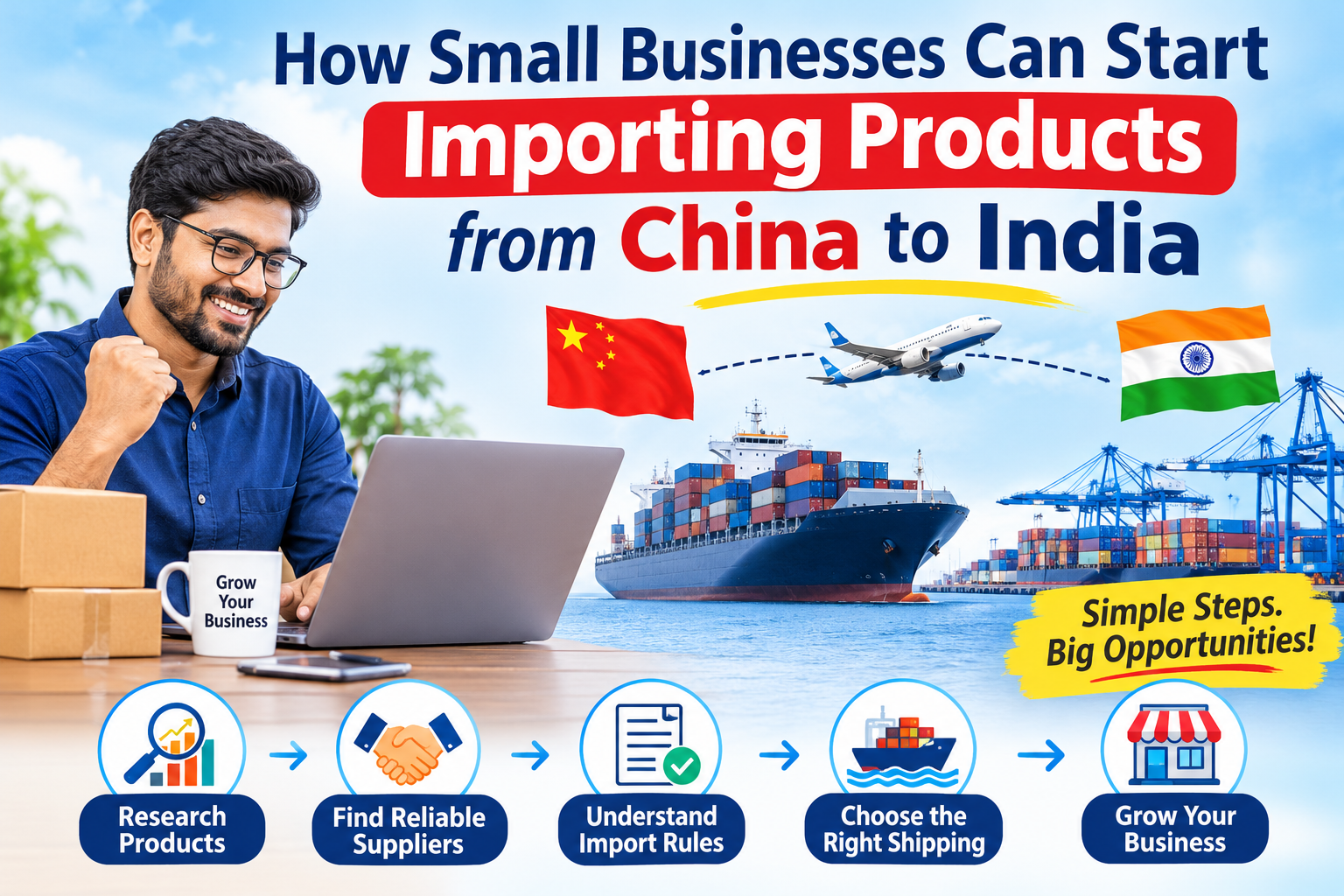
Importing products from China to India has become an attractive business opportunity for small businesses, startups, wholesalers, retailers, and online sellers. China offers a wide range of products at competitive prices, including electronics, mobile accessories, home appliances, fashion accessories, machinery, packaging materials, and industrial equipment.
For Indian entrepreneurs, importing from China can help reduce sourcing costs, expand product selections, and improve business profitability. However, starting an import business requires proper planning, reliable suppliers, knowledge of customs regulations, and an efficient shipping partner.
In this guide, we explain how small businesses can start importing products from China to India, understand the import process, manage shipping costs, and avoid common mistakes.
1. Research the Indian Market Before Importing
The first step is identifying products that have demand in the Indian market. Before purchasing anything from China, research customer requirements, competitors, selling prices, and potential profit margins.
Some popular product categories include:
- Mobile accessories and electronic components
- Home and kitchen products
- Fashion accessories and lifestyle products
- LED lights and electrical accessories
- Packaging materials
- Industrial tools and machinery
- Toys and stationery products
Use online marketplaces, competitor websites, social media, and local market research to understand which products offer good business opportunities.
Tip: Start with a small quantity of products instead of investing heavily in your first shipment.
2. Find Reliable Suppliers in China
Finding trustworthy suppliers is one of the most important steps when importing products from China to India.
Businesses can explore supplier directories, trade platforms, and professional sourcing networks to identify manufacturers and wholesalers.
Before choosing a supplier, consider the following:
- Check the supplier’s business history and experience.
- Request product catalogues and detailed specifications.
- Compare prices from multiple suppliers.
- Ask for product samples whenever possible.
- Verify manufacturing capabilities and certifications.
- Confirm minimum order quantities (MOQ).
- Discuss packaging, payment terms, and delivery timelines.
Avoid selecting suppliers based only on the lowest price. Product quality, communication, consistency, and reliability are equally important.
3. Understand Import Documentation and Legal Requirements
Indian businesses must complete the necessary documentation before importing commercial goods.
Important requirements may include:
Import Export Code (IEC): An IEC issued by the Directorate General of Foreign Trade (DGFT) is generally required for commercial imports, subject to applicable exemptions.
GST Registration: Businesses should understand their GST obligations and input tax credit eligibility based on their registration status and transaction details.
Commercial Invoice: This document provides product descriptions, quantities, prices, and supplier details.
Packing List: It contains information about packaging, carton quantities, dimensions, and shipment weight.
Bill of Lading or Airway Bill: These documents serve as transport documents for sea freight and air freight shipments respectively.
Bill of Entry: This is filed with Indian Customs for clearance of imported goods.
Depending on the product, additional documents, licences, certificates, or regulatory approvals may be required. For example, certain electronics, food products, toys, and other regulated goods may require specific compliance before import.
Always verify the latest requirements for your product category before placing an order.
4. Calculate the Total Import Cost
One common mistake made by beginners is calculating only the product purchase price. The actual import cost includes several additional expenses.
Consider these cost components:
- Product purchase price
- International shipping charges
- Customs duty and applicable import taxes
- Customs clearance fees
- Insurance charges, where applicable
- Local transportation costs
- Warehousing and handling expenses
For example, a product purchased at a low price may become expensive after adding freight, customs duties, taxes, and other charges.
Before confirming your order, request a complete shipping quotation and estimate the landed cost per unit.
Understanding landed costs helps businesses set competitive selling prices and calculate realistic profit margins.
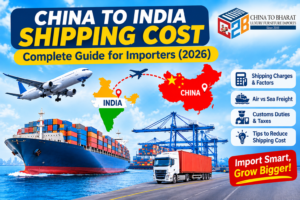
5. Choose the Right Shipping Method from China to India
Selecting the appropriate shipping method depends on shipment size, product type, delivery deadline, and budget.
Air Freight
Air freight is suitable for smaller shipments, lightweight products, samples, and urgent deliveries. It generally offers faster transit times but costs more per kilogram than sea freight.
Sea Freight
Sea freight is a practical option for bulk shipments, heavy goods, machinery, and larger commercial orders. It is generally more economical for large cargo volumes, although transit times are longer.
Door-to-Door Shipping
Door-to-door shipping provides a convenient logistics solution by coordinating transportation from the supplier’s location in China to the delivery address in India.
Depending on the service agreement, it may include cargo collection, international transportation, customs coordination, and final delivery.
Small businesses should compare shipping options based on total cost, delivery time, customs arrangements, and service transparency.
6. Understand Indian Customs Clearance
Customs clearance is an important part of importing products from China to India.
After the shipment reaches India, the required import documents are submitted to Customs. Authorities assess the goods, verify their declared value and classification, determine applicable duties, and conduct inspections where necessary.
The importer must ensure that product descriptions, quantities, values, and HS codes are accurate.
Incorrect declarations, missing documents, restricted products, or regulatory non-compliance can lead to delays, additional costs, or penalties.
Working with an experienced customs broker or logistics partner can help businesses understand documentation requirements and coordinate the clearance process.
7. Start with a Small Trial Shipment
New importers should avoid placing large orders without first testing the supplier and product quality.
A trial shipment helps you:
- Check actual product quality.
- Understand packaging standards.
- Evaluate shipping performance.
- Calculate real landed costs.
- Identify potential customs issues.
- Test customer demand in India.
Once the first shipment is successful, you can gradually increase order quantities and build a stable supply chain.
8. Common Mistakes Small Importers Should Avoid
Many beginners face unnecessary expenses because they overlook important details.
Avoid these common mistakes:
- Choosing suppliers without verification.
- Ignoring product certifications and import restrictions.
- Underestimating customs duties and shipping charges.
- Placing large orders without requesting samples.
- Using incorrect HS codes or product descriptions.
- Making payments without checking supplier credibility.
- Selecting shipping partners based only on low prices.
- Failing to calculate the complete landed cost.
Proper research and professional logistics support can reduce these risks.
9. Choose a Reliable China to India Shipping Partner
International logistics can be challenging for small businesses, especially those importing for the first time. A reliable shipping partner can help coordinate cargo collection, international transportation, documentation, customs-related processes, and delivery.
When selecting a logistics provider, check its experience with China-to-India shipments, pricing transparency, communication, tracking support, and delivery arrangements.
ChinaToBharat helps businesses explore China-to-India shipping and import logistics solutions. Whether you are a startup, wholesaler, retailer, or established importer, choosing the right logistics support can make your importing journey more manageable.
Conclusion
Starting an import business from China to India can create valuable opportunities for small businesses. However, success depends on choosing the right products, finding reliable suppliers, understanding Indian import regulations, calculating landed costs, and selecting suitable shipping methods.
Begin with proper market research, verify suppliers, arrange a small trial shipment, and understand customs documentation before scaling your business.
With careful planning and dependable logistics support, small businesses can build a more efficient and sustainable import operation.
Looking for reliable China to India shipping solutions? Connect with ChinaToBharat to explore international cargo shipping, import sourcing, and logistics support for your business.
Frequently Asked Questions (FAQs)
1. Can small businesses import products from China to India?
Yes. Small businesses can import commercial products from China by meeting applicable Indian customs, DGFT, GST, and product-specific regulatory requirements.
2. Is an IEC required to import products from China?
An Import Export Code issued by DGFT is generally required for commercial imports, subject to applicable exemptions.
3. What is the cheapest way to ship products from China to India?
Sea freight is generally more economical for large and heavy shipments, while air freight is suitable for smaller and urgent shipments.
4. How much money is required to start importing from China?
The investment depends on product cost, minimum order quantity, shipping, customs duties, taxes, and other expenses. Starting with a small trial order can help control risk.
5. How can I find reliable Chinese suppliers?
Research supplier credentials, compare quotations, request samples, verify product quality, and check business history before placing an order.
6. What documents are required to import goods from China to India?
Common documents include IEC, commercial invoice, packing list, Bill of Lading or Airway Bill, and Bill of Entry. Additional approvals may apply depending on the product.
7. Can I import products from China directly to my business address in India?
Yes. Door-to-door shipping services can coordinate transportation from the supplier in China to your Indian delivery address, subject to the service terms and customs requirements.