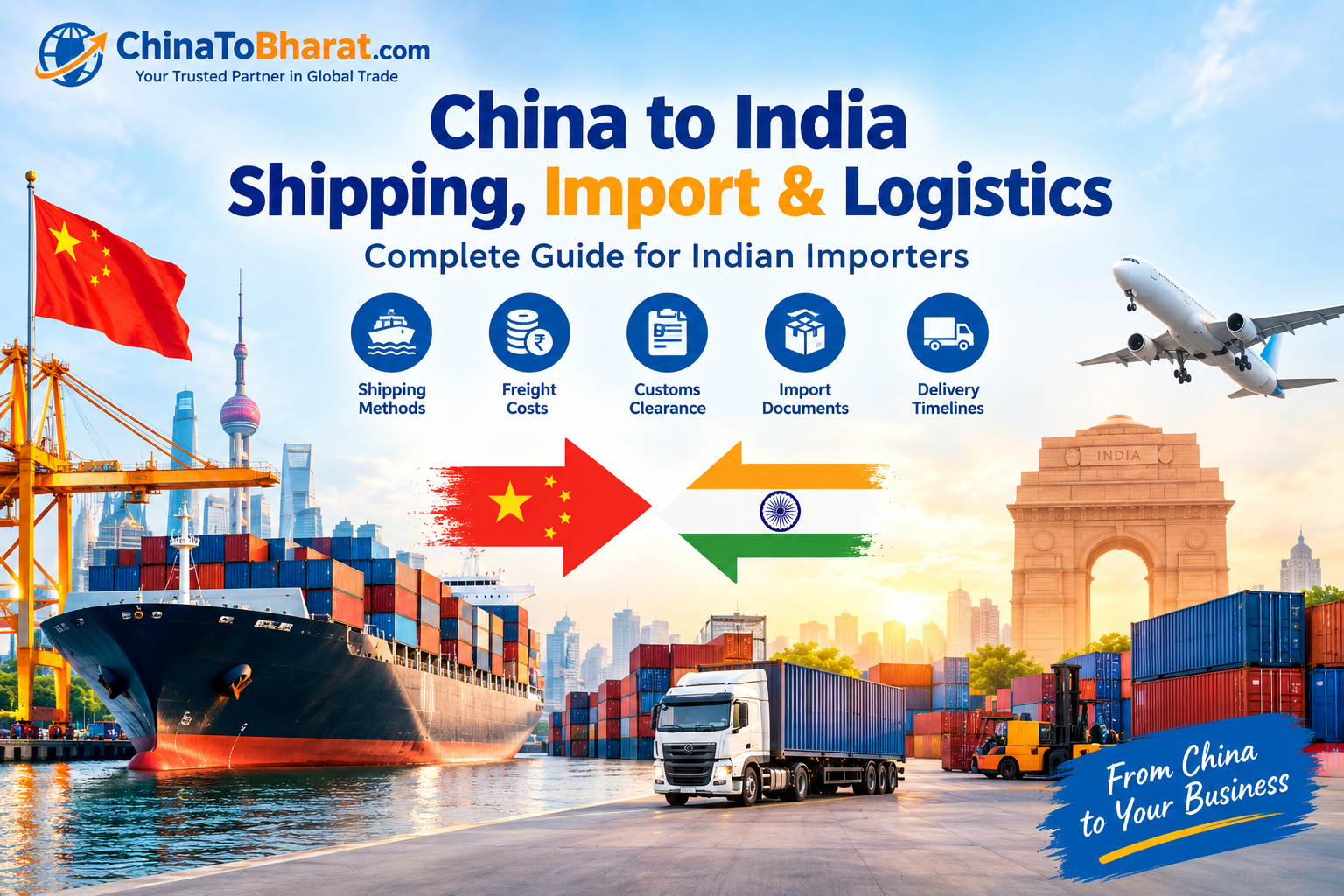
Shipping goods from China to India has become an important part of international trade for businesses of all sizes. From electronics and machinery to home décor, textiles, and industrial components, Indian businesses source a wide range of products from Chinese manufacturers.
However, successful importing involves more than finding a supplier. Understanding shipping methods, freight costs, customs clearance, import documentation, and delivery timelines can help businesses reduce risks and manage their supply chains efficiently.
In this guide, we explain everything you need to know about China to India shipping, import procedures, logistics solutions, and international freight services.
Why Do Indian Businesses Import Products from China?
China is a major global manufacturing hub, offering a broad selection of products for wholesalers, retailers, manufacturers, and e-commerce businesses.
Some common reasons Indian businesses import from China include:
- Product variety: Access to electronics, machinery, accessories, packaging materials, and industrial products.
- Manufacturing capabilities: A wide network of factories and specialized suppliers.
- Bulk purchasing opportunities: Potential cost savings when importing suitable quantities.
- Product customization: Many manufacturers offer customized specifications, branding, and packaging.
- Business expansion: Importing can help businesses introduce new products and serve additional customer segments.
Before placing an order, verify supplier credibility, product quality, applicable Indian import requirements, and the total landed cost.
Best Shipping Methods from China to India
Choosing the right shipping method is essential for balancing cost, delivery speed, and shipment size. The most suitable option depends on your cargo, budget, urgency, and destination.
1. Air Freight from China to India
Air freight is generally suitable for urgent shipments, lightweight products, high-value goods, and time-sensitive commercial orders.
Advantages:
- Faster transportation than standard sea freight.
- Suitable for smaller and higher-value shipments.
- Useful for urgent inventory replenishment.
Considerations: Air freight can be more expensive per kilogram. Charges may depend on actual or volumetric weight, whichever is applicable under the carrier’s pricing rules.
2. Sea Freight from China to India
Sea freight is commonly used for large, heavy, or bulky commercial shipments.
Advantages:
- Often economical for larger shipments.
- Suitable for machinery, furniture, industrial goods, and bulk cargo.
- Supports full container load (FCL) and less than container load (LCL) shipments.
FCL means the shipment uses a full container, while LCL allows multiple shippers to share container space.
Sea freight generally takes longer than air freight, and port handling, customs clearance, transshipment, and inland delivery can affect the total transit time.
3. Express Courier Services
International express courier services may suit samples, documents, and small parcels, depending on the provider’s accepted commodities and service coverage.
Before booking, check the carrier’s weight limits, restricted-item policy, customs handling arrangements, and delivery terms.
How Long Does Shipping from China to India Take?
Shipping time depends on the origin city, destination, transportation method, carrier schedule, customs procedures, and final delivery arrangements.
Air freight is typically faster than sea freight, while express courier services may be suitable for smaller, urgent consignments.
Remember that quoted transit time is not always the same as total door-to-door delivery time. Export handling, customs clearance, inspections, public holidays, and last-mile transportation may add extra days.
For an accurate estimate, request a shipment-specific schedule from your freight forwarder before confirming your purchase.
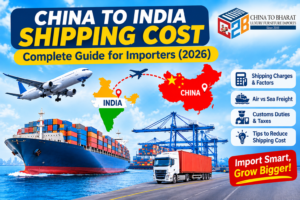
How Much Does Shipping from China to India Cost?
The cost of shipping from China to India varies according to several factors. There is no single rate that applies to every shipment.
Important cost components include:
- Freight charges: Based on the shipping method, chargeable weight, cargo volume, and route.
- Pickup and origin handling: Charges for collecting and preparing the goods in China.
- Documentation fees: Costs associated with shipping and export paperwork.
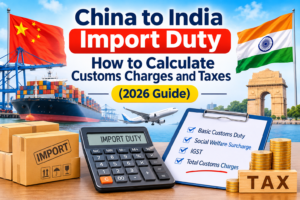
- Customs duties and taxes: Applicable charges determined by the product classification and current Indian regulations.
- Port or airport handling: Fees for handling cargo at the destination.
- Customs broker fees: Charges for customs clearance services, where applicable.
- Insurance: Optional or contractually required coverage, depending on the shipment.
- Inland transportation: Delivery from the arrival port or airport to the final destination.
To compare quotations accurately, request a complete breakdown of charges and clarify which costs are excluded.
Calculating the total landed cost before ordering helps you set realistic selling prices and protect your profit margins.
Customs Clearance for Imports from China to India
Customs clearance is a critical part of the importing process. Imported goods must comply with applicable Indian customs laws, product regulations, and import policies.
Depending on the shipment, commonly required documents may include:
- Commercial invoice.
- Packing list.
- Bill of lading or air waybill.
- Importer Exporter Code (IEC), where required.
- Bill of Entry.
- Certificate of origin, when applicable or requested.
- Product-specific certificates, licences, or approvals, where required.
The correct documents depend on the product, shipment arrangement, and applicable regulations.
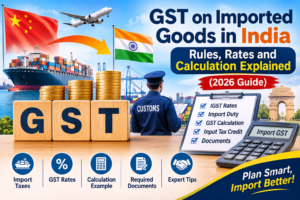
Importers should identify the appropriate HS code, verify the applicable customs duty and Integrated GST (IGST), and check whether restrictions or special approvals apply.
Certain products may require compliance with requirements administered by authorities such as the Bureau of Indian Standards (BIS), the Food Safety and Standards Authority of India (FSSAI), or other relevant agencies.
Important: Do not assume that every product can be imported freely. Verify current requirements through official Indian government sources or a qualified customs professional before placing an order.
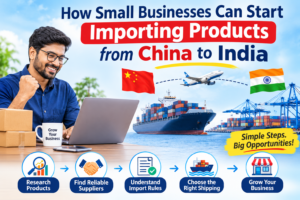
Step-by-Step Process for Importing from China to India
Follow these steps to organize your import shipment efficiently.
Step 1: Find a reliable supplier
Research manufacturers, request business details, compare quotations, and evaluate product quality. Consider ordering samples before making a large purchase.
Step 2: Confirm product specifications
Finalize quantities, packaging, product standards, payment terms, and delivery expectations with the supplier.
Step 3: Check import eligibility
Confirm the HS code, applicable duties, product-specific restrictions, and any required licences or certifications.
Step 4: Choose a shipping method
Compare air freight, sea freight, and express courier services according to your budget, cargo size, and urgency.
Step 5: Request a detailed quotation
Ask your logistics provider to explain freight charges, destination costs, customs clearance arrangements, and final delivery charges.
Step 6: Prepare shipping documents
Ensure that the invoice, packing list, transport documents, and other required paperwork are complete and consistent.
Step 7: Complete customs clearance
Submit the required declarations and documents, pay applicable duties and taxes, and address any customs queries or inspections.
Step 8: Arrange final delivery
After release from customs, coordinate transportation to your warehouse, shop, factory, or other destination.
How to Choose the Right China to India Logistics Partner
A reliable logistics partner can help simplify shipment coordination and improve visibility throughout the import process.
Before choosing a freight forwarder, consider these factors:
- Experience handling shipments between China and India.
- Transparent quotations with clearly defined exclusions.
- Knowledge of customs documentation and import compliance.
- Access to suitable air freight and sea freight options.
- Shipment tracking and responsive customer support.
- Clear communication about delays, additional charges, and delivery arrangements.
Avoid selecting a provider based solely on the lowest advertised price. A detailed quotation and clear service terms can help prevent unexpected expenses.
Common Mistakes to Avoid When Importing from China
New importers can face unnecessary costs when they overlook important details.
Avoid these common mistakes:
- Choosing suppliers without verifying their credibility.
- Ignoring Indian product compliance requirements.
- Underestimating customs duties and destination charges.
- Selecting a shipping method without comparing total costs.
- Using incomplete or inconsistent shipping documents.
- Assuming quoted transit times guarantee delivery dates.
- Failing to inspect product quality before shipment.
Planning ahead and working with experienced logistics professionals can help reduce these risks.
Conclusion: Make China to India Shipping Easier
Importing from China to India can create valuable opportunities for Indian businesses, provided shipments are planned carefully. Choosing the right freight method, calculating landed costs, preparing accurate documentation, and understanding customs requirements are essential steps toward successful importing.
Whether you are importing your first sample or managing regular commercial shipments, a well-organized logistics process can help improve cost control, delivery planning, and supply chain reliability.
Looking for China to India shipping and import guidance? Visit ChinaToBharat.com to explore shipping information and learn more about international logistics for your business.
Disclaimer: Shipping schedules, freight rates, customs duties, and import regulations may change. Confirm current requirements and shipment-specific charges with your logistics provider and the relevant Indian authorities.
Frequently Asked Questions (FAQs)
1. What is the best way to ship goods from China to India?
Air freight is suitable for many urgent shipments, while sea freight is often preferred for larger or bulk consignments. The best option depends on cargo size, urgency, budget, and delivery requirements.