Importing products from China to India can be a profitable business opportunity for wholesalers, retailers, manufacturers, and e-commerce sellers. China offers a wide range of products at competitive prices, making it an attractive sourcing destination for Indian businesses. However, the actual cost of importing products involves much more than the supplier’s quoted price.
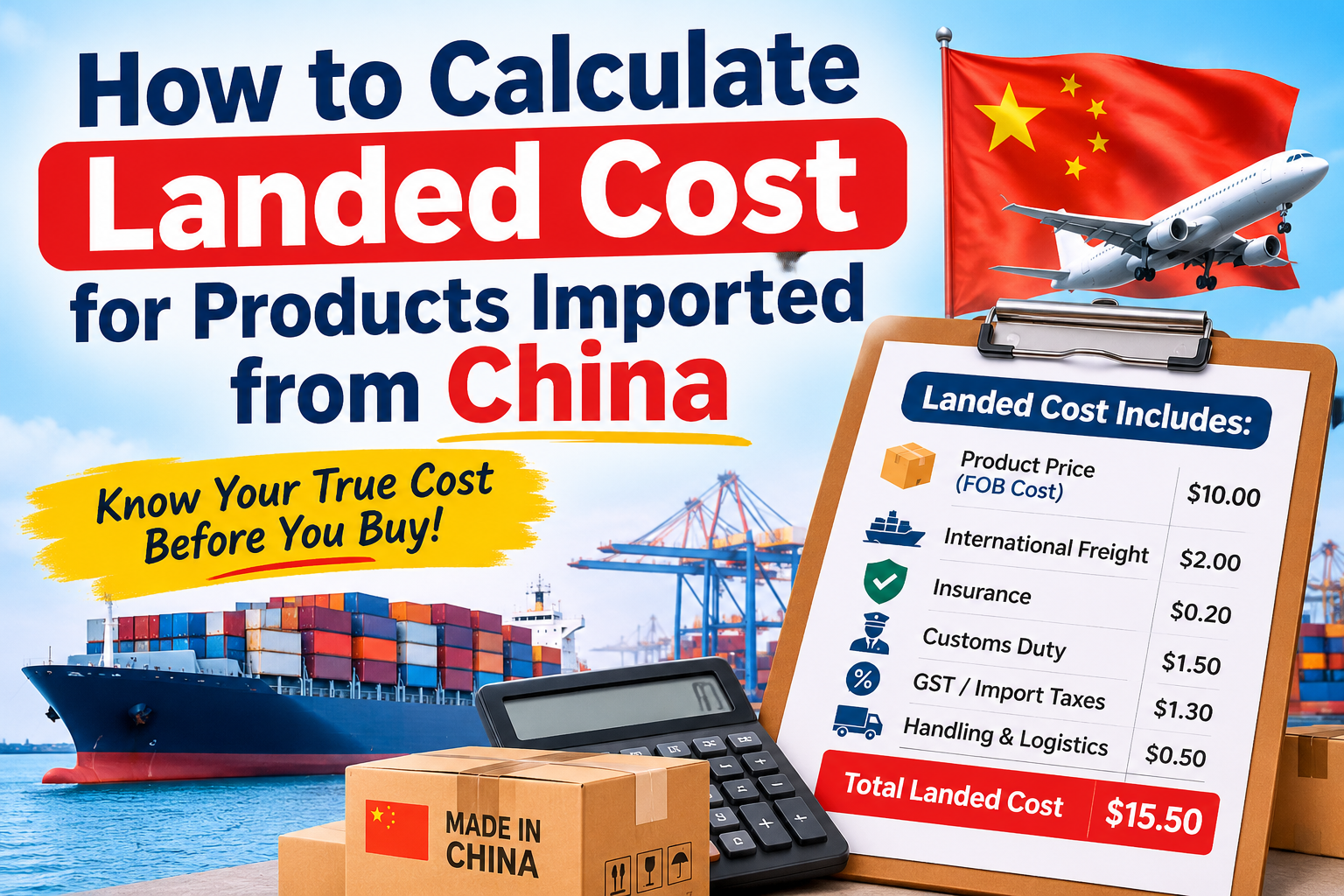
To understand the real investment required, businesses must calculate the landed cost of imported products. Landed cost includes the product price, international shipping, customs duties, taxes, insurance, handling charges, and other expenses involved in bringing goods from China to India.
In this guide, we explain how to calculate landed cost, understand import expenses, and avoid unexpected costs when importing products from China.
What Is Landed Cost in International Shipping?
Landed cost is the total amount a business spends to purchase and transport products from an international supplier to its final destination.
When importing goods from China to India, landed cost includes all expenses incurred from purchasing the products until they reach the importer’s warehouse or designated delivery location.
Understanding landed cost helps businesses:
- Calculate the actual cost of imported products.
- Determine suitable selling prices.
- Estimate profit margins accurately.
- Compare different Chinese suppliers.
- Avoid unexpected import expenses.
- Make better purchasing decisions.
For example, a product purchased from China for ₹500 may cost significantly more after shipping, customs duties, taxes, and transportation expenses are added.
Major Components of Landed Cost When Importing from China
Before calculating landed cost, it is important to understand the different expenses involved in international imports.
1. Product Purchase Cost
Product purchase cost is the amount paid to the Chinese supplier for the goods. It depends on product quantity, quality, specifications, and supplier pricing.
For example, if you purchase 500 electronic accessories at ₹200 each, the total product cost will be:
500 × ₹200 = ₹1,00,000.
Always confirm product specifications, minimum order quantities, payment terms, and packaging costs before placing an order.
2. International Shipping Charges
Shipping charges are the expenses involved in transporting products from China to India.
The shipping cost depends on:
- Shipping method (air freight or sea freight).
- Total shipment weight and volume.
- Product category.
- Shipping distance.
- Freight market conditions.
- Cargo handling requirements.
Air freight is generally faster, while sea freight can be more economical for large and heavy shipments.
Choosing the right shipping method can significantly reduce your overall landed cost.
3. Insurance Charges
International shipping insurance protects imported goods against certain risks, including damage, loss, or accidents during transportation.
Insurance charges depend on the shipment value, product category, transportation method, and coverage selected.
Although insurance adds to the import cost, it can help businesses manage financial risks associated with international transportation.
4. Customs Duty and Import Taxes
Customs duty is an important component of the landed cost for products imported into India.
The applicable duty depends on the product’s classification under the Harmonized System (HS) code, country of origin, customs valuation, and applicable Indian import regulations.
Common import charges may include:
- Basic Customs Duty (BCD).
- Social Welfare Surcharge (SWS), where applicable.
- Integrated Goods and Services Tax (IGST).
- Other applicable duties or levies, depending on the product.
Importers should verify the applicable rates for their specific HS code through official Indian customs resources.
Remember that IGST may be available as input tax credit to eligible registered businesses, subject to applicable GST rules. Therefore, distinguish between cash outflow and the final non-recoverable cost.
5. Customs Clearance and Handling Charges
Customs clearance involves completing the necessary documentation and regulatory procedures to release imported goods.
Additional expenses may include:
- Customs broker or customs house agent fees.
- Port handling charges.
- Documentation fees.
- Terminal handling charges.
- Examination charges, where applicable.
- Storage or demurrage charges if delays occur.
Working with an experienced logistics partner can help businesses manage documentation and reduce avoidable delays.
6. Local Transportation Costs
After customs clearance, goods must be transported from the port, airport, or warehouse to the final delivery location.
Local transportation expenses depend on shipment size, delivery distance, vehicle type, and handling requirements.
Include these charges when calculating the final landed cost.
How to Calculate Landed Cost: Step-by-Step Formula
The basic landed cost formula is:
Landed Cost = Product Cost + International Shipping + Insurance + Customs Duties + Import Taxes + Handling Charges + Local Transportation + Other Applicable Expenses
Let’s understand this with a practical example.
Example: Calculating Landed Cost for Products Imported from China
Imagine an Indian wholesaler imports 500 products from a Chinese manufacturer.
The estimated expenses are:
| Expense | Amount |
|---|---|
| Product purchase cost | ₹1,00,000 |
| International shipping | ₹15,000 |
| Insurance | ₹1,000 |
| Customs duty and applicable charges | ₹12,000 |
| Customs clearance and handling | ₹4,000 |
| Local transportation | ₹3,000 |
| Total estimated cost | ₹1,35,000 |
In this simplified example, the total landed cost is ₹1,35,000.
To calculate the landed cost per unit:
₹1,35,000 ÷ 500 = ₹270 per product.
Although the original purchase price was ₹200 per unit, the actual landed cost is ₹270 per unit.
This example uses illustrative figures only. Actual customs duties, taxes, and other charges must be calculated using the applicable product classification, valuation rules, and current regulations.
Tips to Reduce Landed Cost When Importing from China
Reducing landed cost helps businesses improve profitability and maintain competitive product prices.
Here are some practical strategies:
1. Compare Multiple Chinese Suppliers
Do not select suppliers based only on product prices. Compare product quality, packaging, minimum order quantities, payment terms, and shipping arrangements.
2. Choose the Right Shipping Method
Compare air freight and sea freight before confirming your shipment. Sea freight may offer better economics for large shipments, while air freight can be suitable for urgent or lightweight products.
3. Consolidate Multiple Shipments
If you purchase products from different suppliers, consider consolidating shipments where practical. This can help reduce transportation and handling expenses.
4. Understand Customs Duties Before Ordering
Check the HS code and applicable import duties before purchasing products. This helps you estimate total expenses and avoid unexpected customs costs.
5. Avoid Unnecessary Storage Charges
Prepare the required import documents in advance and coordinate with your logistics provider to reduce clearance delays and additional storage expenses.
6. Work with a Reliable Logistics Partner
A professional China-to-India logistics partner can help coordinate transportation, shipping documentation, cargo handling, and customs clearance support.
Common Mistakes to Avoid When Calculating Landed Cost
Many first-time importers calculate landed cost incorrectly because they overlook additional expenses.
Avoid these common mistakes:
- Calculating only the supplier’s product price.
- Ignoring international shipping and insurance.
- Using incorrect HS codes.
- Underestimating customs duties and taxes.
- Forgetting port handling and clearance charges.
- Ignoring local transportation expenses.
- Not accounting for currency exchange fluctuations.
- Confusing recoverable GST input tax credit with non-recoverable costs.
A complete landed cost calculation gives businesses a clearer picture of their actual import investment.
Why Choose China To Bharat for China to India Shipping Solutions?
Importing products from China requires careful planning, reliable transportation, and proper coordination. Businesses need a logistics partner that understands the challenges of international shipping and helps manage the import process efficiently.
China To Bharat helps businesses explore China-to-India shipping and logistics solutions for their import requirements.
Whether you are a small business owner, wholesaler, retailer, or established importer, choosing suitable shipping arrangements can help you manage transportation costs and streamline your supply chain.
Visit https://chinatobharat.com/ to learn more about China-to-India shipping and import logistics solutions.
Frequently Asked Questions (FAQs)
1. What is landed cost when importing from China to India?
Landed cost is the total expense of purchasing and transporting products from China to India, including product price, shipping, insurance, customs duties, taxes, handling, and local transportation.
2. How do I calculate the landed cost of imported products?
Add the product purchase price, international freight, insurance, applicable customs duties, taxes, clearance fees, handling charges, and local transportation expenses.
3. Does landed cost include customs duty and GST?
Yes. Landed cost calculations generally include applicable customs duties and import taxes. However, eligible GST input tax credit should be accounted for separately when determining the final non-recoverable cost.
4. Which shipping method is cheaper for importing from China?
Sea freight is often more economical for large shipments, while air freight is generally faster. The best option depends on shipment weight, volume, urgency, and total logistics expenses.
5. Why is landed cost important for Indian importers?
Landed cost helps importers determine actual product expenses, set profitable selling prices, compare suppliers, plan budgets, and avoid unexpected import charges.
6. Can a logistics company help calculate landed cost?
Yes. An experienced logistics provider can help estimate freight, handling, and transportation expenses and coordinate with customs professionals for applicable import charges.
Conclusion
Calculating landed cost is essential for every business importing products from China to India. Looking only at the supplier’s product price can lead to incorrect budgeting and lower-than-expected profit margins.
By including international shipping, insurance, customs duties, taxes, clearance charges, and local transportation, businesses can understand their actual import expenses.
Plan your shipments carefully, compare logistics options, verify applicable customs regulations, and work with a reliable logistics partner to make your China-to-India import process more efficient and cost-effective.