
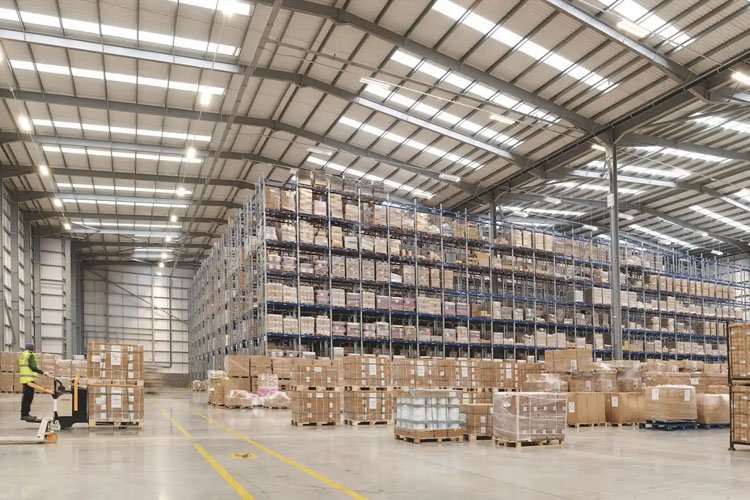
Warehousing and distribution are essential components of a successful supply chain. Businesses need more than transportation to move products from suppliers to customers. They also require secure storage, efficient inventory management, accurate order processing, and reliable delivery solutions. A well-managed warehousing and distribution system helps businesses reduce costs, improve operational efficiency, maintain inventory accuracy, and deliver products on time.
For companies involved in import, export, e-commerce, manufacturing, retail, and wholesale, professional warehousing and distribution services can simplify complex logistics operations. With the right logistics partner, businesses can manage inventory efficiently while ensuring smooth movement of goods from warehouses to their final destinations.
What Is Warehousing and Distribution?
Warehousing refers to the safe storage and management of goods before they are transported to customers, retailers, distributors, or other business locations. Warehouses provide controlled spaces where products can be received, inspected, stored, organized, and prepared for shipment.
Distribution focuses on moving stored products from warehouses to their destinations. It includes order processing, picking and packing, transportation coordination, shipment tracking, and final delivery.
Together, warehousing and distribution create an integrated logistics system that supports the complete movement of goods through the supply chain.
Importance of Warehousing and Distribution Services
Efficient warehousing and distribution can significantly improve supply chain performance. Businesses can store products closer to their target markets, reduce unnecessary transportation delays, and respond quickly to customer orders.
Professional logistics providers also help companies manage fluctuating inventory requirements. Whether a business needs short-term storage, long-term warehousing, bulk inventory management, or regular distribution, customized logistics solutions can be designed according to its requirements.
An organized warehouse also minimizes product damage, misplaced inventory, and order-processing errors. This contributes to better customer satisfaction and stronger business operations.
Key Warehousing Services
1. Secure Storage
Warehouses provide secure storage facilities for different types of products. Goods can be organized according to product category, size, quantity, destination, and handling requirements.
2. Inventory Management
Accurate inventory management helps businesses know how much stock is available, where it is stored, and when additional inventory may be required. Proper inventory records reduce shortages, overstocking, and unnecessary storage costs.
3. Goods Receiving
Warehousing operations begin with receiving goods from suppliers or transportation partners. Products can be checked, documented, counted, and assigned to appropriate storage locations.
4. Picking and Packing
When an order is received, warehouse teams pick the required products and prepare them for shipment. Proper packing protects goods during transportation and helps ensure that customers receive the correct products.
5. Order Fulfillment
Efficient order fulfillment connects warehouse operations with distribution. From receiving an order to preparing the shipment, every stage needs to be coordinated carefully to achieve fast and accurate delivery.
Distribution Services for Businesses
Distribution involves more than simply transporting goods. It requires planning routes, coordinating vehicles, managing shipment documentation, tracking deliveries, and ensuring products reach the correct destinations.
A professional distribution network can support local, regional, national, and international supply chains. Businesses can use distribution services to deliver products to retailers, dealers, distributors, project locations, or individual customers.
For growing businesses, outsourcing distribution can also reduce the need to invest heavily in their own transportation infrastructure.
Benefits of Professional Warehousing and Distribution
Reduced Logistics Costs
Efficient warehouse locations and optimized distribution routes can help businesses control storage and transportation expenses. Consolidating shipments can further improve cost efficiency.
Better Inventory Control
Professional warehouse management systems provide improved visibility of stock levels and inventory movement. Businesses can make better purchasing and replenishment decisions using accurate inventory information.
Faster Order Processing
A well-organized warehouse allows products to be picked, packed, and dispatched efficiently. Faster processing can reduce delivery times and improve the overall customer experience.
Improved Product Safety
Proper storage practices help protect products from damage, contamination, mishandling, and environmental risks. Appropriate packaging and handling procedures can further reduce losses.
Greater Business Flexibility
Outsourced warehousing and distribution allow businesses to scale their logistics operations according to demand. Storage and distribution capacity can be adjusted during seasonal peaks, promotional periods, or business expansion.
Technology in Modern Warehousing
Technology has transformed traditional warehouse operations. Modern logistics facilities can use warehouse management systems, barcode scanning, inventory tracking, digital documentation, and automated processes to improve accuracy.
Real-time inventory visibility allows businesses to monitor stock movement and make informed decisions. Digital tracking can also help customers and businesses monitor shipments throughout the distribution process.
Automation can reduce repetitive manual work and improve warehouse productivity. Depending on business requirements, technologies such as automated storage systems, sorting equipment, scanning systems, and inventory management software can be integrated into warehouse operations.
Warehousing for Import and Export Businesses
Importers and exporters often require reliable warehousing solutions because international shipments may involve different transportation schedules, customs procedures, and delivery requirements.
Imported goods can be stored securely while documentation and clearance processes are completed. Once the goods are ready for delivery, they can be distributed to customers, retailers, or other destinations.
For export shipments, warehouses can support product consolidation, packaging, labeling, documentation, and shipment preparation. Integrating warehousing with freight forwarding and customs clearance can create a smoother international logistics process.
Choosing the Right Warehousing and Distribution Partner
Selecting the right logistics partner is important for maintaining an efficient supply chain. Businesses should consider warehouse location, storage capacity, security, inventory management capabilities, distribution coverage, technology, handling procedures, and customer support.
A good logistics provider should understand the specific requirements of the business and provide flexible solutions. Experience in handling different types of products and shipments can also be an important advantage.
Businesses should also evaluate the provider’s ability to scale operations as their inventory and distribution requirements increase.
Warehousing and Distribution in Hyderabad
Hyderabad is an important commercial and logistics hub with growing demand for warehousing, transportation, import, export, and distribution services. Its connectivity to major markets makes it a strategic location for businesses looking to manage regional and national supply chains.
Professional warehousing and distribution services in Hyderabad can help businesses store inventory efficiently and distribute goods across Telangana, neighboring states, and other parts of India.
For companies involved in international trade, combining warehousing with freight forwarding, customs clearance, and transportation services can create a more streamlined logistics solution.
Future of Warehousing and Distribution
The future of warehousing is increasingly focused on automation, real-time visibility, data-driven decision-making, and sustainable logistics. Businesses are looking for faster fulfillment, accurate inventory information, flexible storage, and cost-effective distribution.
E-commerce growth is also increasing demand for efficient order fulfillment and last-mile distribution. As customer expectations for faster deliveries continue to rise, logistics providers need to develop responsive and technology-driven warehouse networks.
Sustainable warehousing practices, optimized transportation routes, energy-efficient facilities, and improved packaging can also help businesses reduce their environmental impact.
Conclusion
Warehousing and distribution form the foundation of an efficient supply chain. From secure storage and inventory management to order fulfillment and final delivery, every stage contributes to the smooth movement of products.
Professional warehousing and distribution services can help businesses reduce logistics costs, improve inventory accuracy, accelerate order processing, protect products, and respond effectively to changing market demands. For importers, exporters, manufacturers, retailers, and e-commerce businesses, a reliable logistics partner can provide the infrastructure and expertise required for sustainable growth.
By combining modern warehouse technology, efficient inventory management, strategic storage locations, and dependable distribution networks, businesses can build a stronger supply chain and deliver better service to their customers.